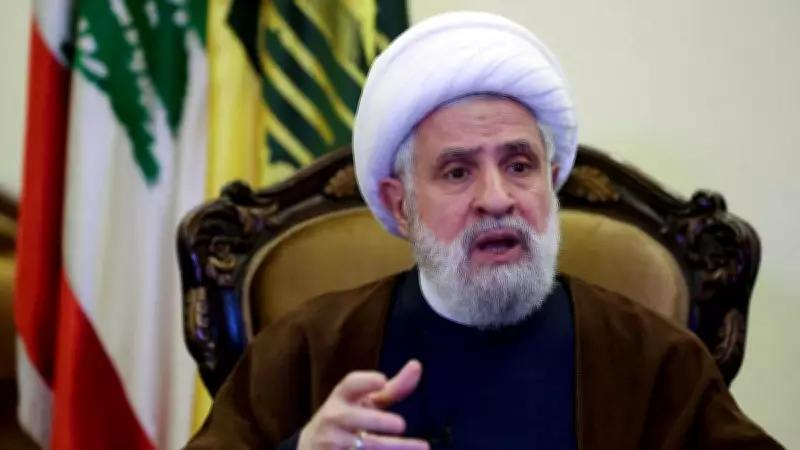
Hezbollah's leader on Friday rejected a proposed framework agreement between Israel and Lebanon, describing it as a 'humiliation' and warning that any attempt to link Israel's withdrawal from southern Lebanon to the group's disarmament crossed 'red lines.'
Hezbollah rejects framework deal
In a televised speech, Hezbollah Secretary-General Hassan Nasrallah said the agreement, which has been under discussion with international mediators, would effectively reward Israel for its 2000 withdrawal from southern Lebanon while demanding concessions from the Lebanese resistance. 'This is not a peace agreement; it is a surrender document,' Nasrallah stated. 'We will not accept any framework that ties the liberation of our land to the disarmament of our resistance.'
Background of the conflict
The proposed agreement aims to resolve long-standing disputes between Israel and Lebanon, including the status of the Shebaa Farms border area and maritime border demarcation. However, Hezbollah, which fought a 34-day war with Israel in 2006, maintains a significant arsenal and remains the dominant military force in Lebanon. The group has repeatedly refused to disarm, citing the need to defend Lebanon against Israeli aggression.

According to analysts, the framework agreement would require Hezbollah to disarm in exchange for Israel's full withdrawal from disputed territories. Nasrallah called this condition unacceptable, arguing that Hezbollah's weapons are essential for Lebanon's defense. 'Our arms are not for sale, and they are not a bargaining chip,' he said.
Regional and international reactions
The United States and France have been mediating the talks, but Nasrallah's rejection casts doubt on the viability of the agreement. A senior U.S. State Department official, speaking on condition of anonymity, said: 'We remain committed to a diplomatic solution, but Hezbollah's stance is a significant obstacle.'
Lebanese Prime Minister Najib Mikati has not publicly commented on Nasrallah's remarks, but his office previously expressed support for the framework as a means to stabilize the border and attract foreign investment. However, Hezbollah's political influence in Lebanon means any agreement will require the group's tacit approval.
Impact on the region
Nasrallah's rejection could escalate tensions along the Israel-Lebanon border, where sporadic exchanges of fire have occurred in recent months. The Israeli military has warned that it will not tolerate any attacks from Lebanese territory. 'If Hezbollah continues to reject a diplomatic solution, Israel reserves the right to defend itself by all means,' said Israeli Defense Minister Yoav Gallant in a statement.
The development also complicates efforts to address Lebanon's economic crisis, as international donors have linked aid to political reforms and the disarmament of militias. 'Without a comprehensive agreement, Lebanon risks further isolation and economic collapse,' said a European Union diplomat based in Beirut.
Nasrallah concluded his speech by vowing that Hezbollah would continue its resistance: 'We will not bow to pressure, and we will not accept humiliation. The path of resistance is the only path to dignity.'