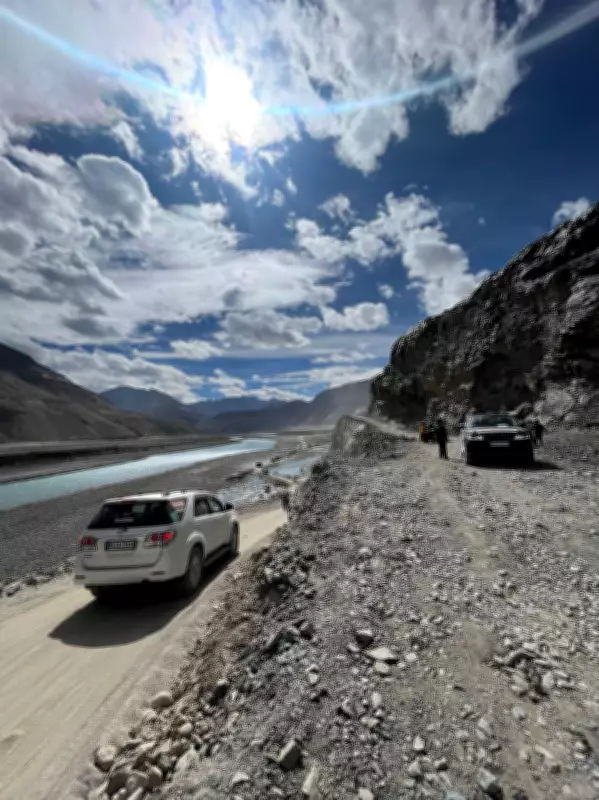
Rapid development in the Himalayas has dramatically improved road connectivity, reducing travel times from days to hours, but has also unleashed unprecedented ecological pressure and a disregard for local knowledge, according to expedition leader Rattan Dhillon, who has spent 15 years leading groups through Ladakh, Spiti, Zanskar, and other remote regions.
Connectivity Gains Come at an Environmental Cost
Dhillon first travelled to Leh-Ladakh in 2010, when no proper highways existed and the journey from Chandigarh took nearly three days. Today, well-built roads allow the same trip in about 14 hours, with 5G connectivity available across much of the region. This transformation has boosted tourism and opened economic opportunities for local communities. However, it has also placed unprecedented pressure on landscapes never designed to handle such large numbers of visitors.
During recent expeditions, Dhillon witnessed vehicles from different states being washed directly in sacred rivers such as the Shyok using detergents and chemicals. Plastic bottles, food wrappers, and other waste are frequently discarded in valleys, rivers, and mountain passes. These incidents are no longer isolated; they are becoming common sights in places once untouched.

Safety Risks from Overconfidence and Ignorance
Travel to high-altitude regions has become easier but not necessarily safer. In the past, reaching Ladakh required weeks of preparation, research, and respect for the terrain. Today, digital maps and viral social media reels create the illusion that these destinations are just another weekend road trip. Many visitors arrive without understanding the risks of high altitude, reduced oxygen levels, or rapidly changing weather.
It is increasingly common to see families with very young children at elevations above 11,000 feet without adequate acclimatisation or medical awareness. Tourists often ignore the importance of gradual ascent, proper hydration, and rest. Every year, local authorities and rescue teams respond to preventable medical emergencies caused not by the mountains themselves, but by a lack of preparation.
Local Wisdom Ignored in Favour of Technology
Equally concerning is the tendency of many travellers to ignore the knowledge of local communities. The people who have lived in these regions for generations understand the mountains better than anyone else. They know which roads become dangerous after rainfall, how weather changes within minutes, and how visitors should acclimatise before travelling further. Yet many tourists rely entirely on navigation apps or social media recommendations. Technology is a useful tool, but it should never replace local wisdom in environments as unpredictable as the Himalayas.
Landslides and Unsustainable Construction
The increasing number of landslides across Himalayan states is another issue. While natural geological conditions play a role, aggressive hill cutting for road widening and new highway projects has weakened mountain slopes in many areas. Roads originally designed as single carriageways are now being expanded, often requiring extensive excavation. Development is necessary, but it must be carried out with careful environmental assessment and scientific planning rather than speed alone.
Call for Sustainable Tourism and Regulation
Tourism is essential for the local economy, but it must become sustainable. Ecologically sensitive regions cannot continue to receive unlimited numbers of visitors without consequences. Dhillon suggests introducing a regulated permit system or seasonal cap on visitor numbers in highly sensitive areas. This would reduce pressure on infrastructure, minimise environmental degradation, improve the travel experience, and provide local communities with a more stable source of income throughout the year rather than concentrating tourism into only a few months.
Authorities should spread awareness to promote responsible tourism. Visitors must understand that preserving these places is as important as enjoying them. Carrying back waste items, respecting local customs, avoiding pollution of rivers, and following advice from local residents should be considered basic responsibilities rather than optional choices.

The Himalayas are among India’s greatest natural treasures. They are not merely tourist destinations but living ecosystems that support millions of people downstream. Development and tourism are both important, but neither should come at the cost of the environment or the well-being of local communities. Progress and conservation must go hand in hand. If we fail to protect these mountains today, future generations may inherit roads and hotels, but they will lose the pristine landscapes that once inspired millions to visit them in the first place.