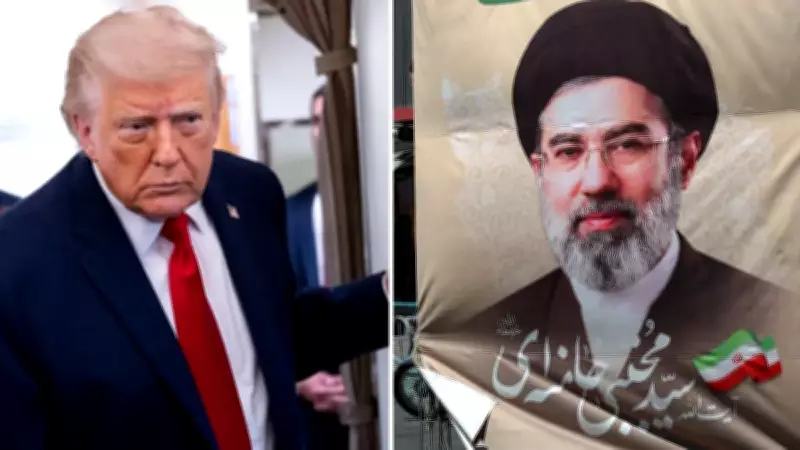
The reopening of the Strait of Hormuz appears increasingly likely as both the United States and Iran signal that a deal is closer than ever. However, fundamental questions regarding Iran's nuclear program persist, casting a shadow over the potential agreement.
Diplomatic Breakthrough on the Horizon
Recent diplomatic efforts have brought Washington and Tehran to the brink of a historic understanding. Officials from both sides have expressed cautious optimism, with a senior US State Department official stating that negotiations have made significant progress in recent weeks.
Iranian Foreign Ministry spokesman Saeed Khatibzadeh echoed this sentiment, noting that the two countries are now closer to a deal than at any point in the past year. The potential reopening of the strait, a critical chokepoint for global oil shipments, would have far-reaching implications for energy markets and international trade.

Nuclear Concerns Remain
Despite the encouraging tone, the core issue of Iran's nuclear activities continues to be a major sticking point. The US insists on verifiable guarantees that Iran's nuclear program remains peaceful, while Tehran demands the lifting of sanctions imposed since 2018.
International Atomic Energy Agency (IAEA) inspectors have reported that Iran's enriched uranium stockpile exceeds limits set by the 2015 nuclear deal. This has heightened concerns among Western nations, who argue that any agreement must include robust monitoring mechanisms.
Economic and Geopolitical Implications
The reopening of the Strait of Hormuz would be a boon for global energy security. Approximately 20% of the world's oil passes through this narrow waterway. A deal could lead to a drop in oil prices and ease inflationary pressures worldwide.
Geopolitically, a US-Iran rapprochement could reshape alliances in the Middle East. Gulf states, particularly Saudi Arabia and the UAE, are closely watching the developments, wary of Iran's regional ambitions.
Next Steps
Both sides have agreed to continue talks in the coming weeks, with the aim of finalizing a framework. However, the path forward is fraught with challenges, including opposition from hardliners in both countries and the need to address broader security concerns in the region.
As the world waits, the prospect of a reopened Hormuz offers a glimmer of hope for stability in a volatile region. Yet, until the nuclear questions are resolved, the deal remains tentative.