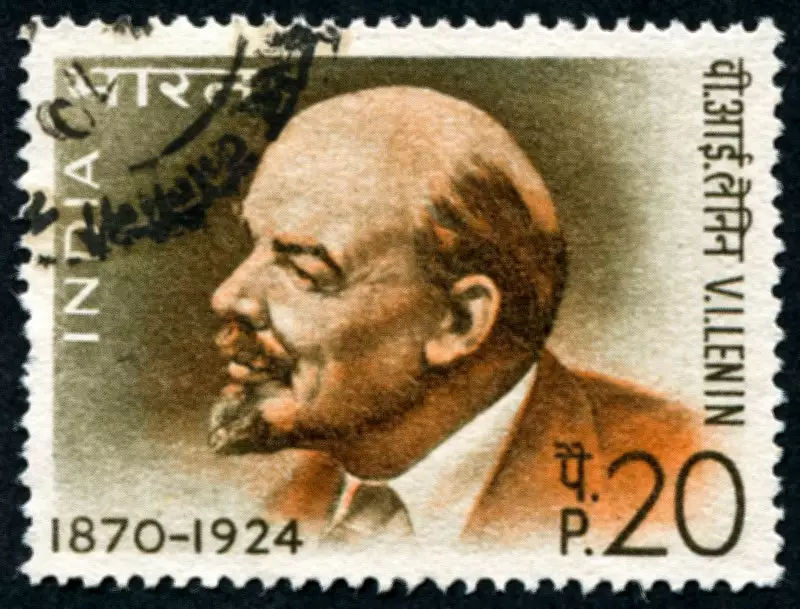
A Fateful Encounter with Lenin's Words
It was my misfortune to come across these lines from Vladimir Lenin's 1920 speech titled 'The Tasks of the Youth Leagues': 'You can become a Communist only when you enrich your mind with a knowledge of all the treasures created by mankind.' Those words sealed my fate. Instead of becoming the perfect Communist I aspired to be, I gradually became a bibliophile.
Soon afterwards, while reading Lenin's Philosophical Notebooks, I encountered another frightening statement: 'It is impossible completely to understand Marx's Capital, especially its first chapter, without having thoroughly studied and understood the whole of Hegel's Logic.' If the first quotation opened the gates of intellectual excess, the second destroyed whatever restraint remained.
The Disastrous Quest Begins
What followed was a disastrous quest. I believed that becoming a Communist required reading everything humanity had produced. I began buying books with missionary zeal. Ancient literature, Enlightenment writers, utopian socialists and Marxist works entered my home. Soon my shelves filled with Marx, Engels, Lenin and Stalin, along with books on philosophy, history, art and literature. All this was financed by my family at considerable cost.

After reading the foundational works of Marxism, I assumed that the difficult part was over. Instead, I discovered Marxism was not a finished doctrine but an intellectual journey. Every book pointed to a philosopher, historian or field necessary to understand the previous one.
Confronting Hegel: The Mountain
Then came Hegel — the mountain between me and Capital. I bought his works and opened Phenomenology of Mind. Within minutes, I developed a severe headache and fell asleep. Undeterred, I bought commentaries. Still confused, I turned to a YouTube lecture titled 'Hegel for Dummies.' At last I grasped the basics: reality is not static; contradictions drive movement; history develops through conflict and transformation. Yet Capital remained a formidable challenge. I still wrestle with its three volumes.
The Growing Library and Its Paradox
Meanwhile, the books multiplied. My library grew beyond 5,000 volumes. Ironically, the larger it became, the less I read. Every book looked important. To escape the anxiety of choosing one, I bought more — creating even more anxiety. Eventually I developed a strange habit. I arranged the 'important books' beside my bed with revolutionary determination — and read none of them. I sat admiring my bookshelves like a feudal lord inspecting his estates.
Yet among those thousands, some became lifelong companions: The People's Marx edited by Julian Borchardt, Max Beer's The Life and Teaching of Karl Marx and the works of Georgi Plekhanov.
The Final Lesson
My book-buying career ended when my youngest brother remarked that before purchasing new ones, I should first read those I already owned. Years later, I discovered Umberto Eco's defence of people like me: the value of a library lies not only in the books read but also in the unread ones that remind us how vast human ignorance is. Perhaps that was the first practical lesson in Marxism I ever learned.
The writer is a Chandigarh-based poet and journalist.