

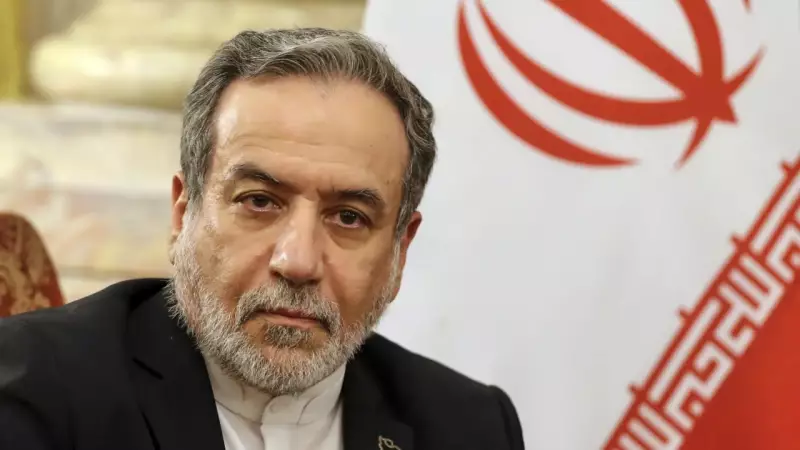
Iran's top diplomat has launched a sharp accusation against the United States and Israel, claiming the two nations are directly interfering to fuel the massive protest movement shaking the Islamic Republic. The remarks come as authorities signal a severe crackdown, with the death toll rising and internet access severed nationwide.
Foreign Minister Points Finger at Washington and Tel Aviv
During a visit to Lebanon on Friday, Iranian Foreign Minister Abbas Araghchi stated that the ongoing demonstrations were being manipulated by external forces. He explicitly named the United States and Israel as the primary actors. "This is what the Americans and Israelis have stated, that they are directly intervening in the protests in Iran," Araghchi asserted.
He further alleged that the goal of these foreign powers was to escalate the situation. "They are trying to transform the peaceful protests into divisive and violent ones," the minister added, attempting to frame the internal unrest as a product of foreign subversion.

Military Intervention Deemed Unlikely Despite Trump's Warnings
Despite repeated and stark warnings from US President Donald Trump, who has said America would "come to the rescue" of protesters if they are violently suppressed, Araghchi played down the threat of foreign military action. He cited historical precedents to support his claim.
"Regarding the possibility of seeing military intervention against Iran, we believe there is a low possibility of this because their previous attempts were total failures," the foreign minister told reporters, as quoted by the AFP news agency. This dismissal sets the stage for a domestic confrontation without the immediate fear of external military involvement.
Iran Braces for Harsher Crackdown as Death Toll Rises
The government's rhetoric is hardening as the protests, which began in late last month over economic woes and a collapsing currency, have morphed into the most significant challenge to Iran's clerical establishment in years. The response from authorities has been increasingly brutal.
According to the US-based Human Rights Activists News Agency, cited by AP, at least 62 people have been killed and more than 2,300 detained since the demonstrations erupted. Iranian state media has taken to labelling demonstrators as 'terrorists,' a term that often precedes severe state retaliation.
In a clear message, Supreme Leader Ayatollah Ali Khamenei on Friday dismissed Trump's expressions of support for the protesters. Khamenei accused the US President of having hands "stained with the blood of Iranians." Meanwhile, Judiciary Chief Gholamhossein Mohseni-Ejei warned that punishments would be "decisive, maximum and without any legal leniency."
Analysts note the unrest gained momentum after calls by Iran's exiled former crown prince, Reza Pahlavi, for public demonstrations. In a move to stifle communication and organisation, Iranian authorities imposed a nationwide internet and international phone blackout earlier this week, effectively isolating the country. Activists fear this blackout has allowed security forces to act with greater impunity and has obscured the true scale of the protests from the world.






