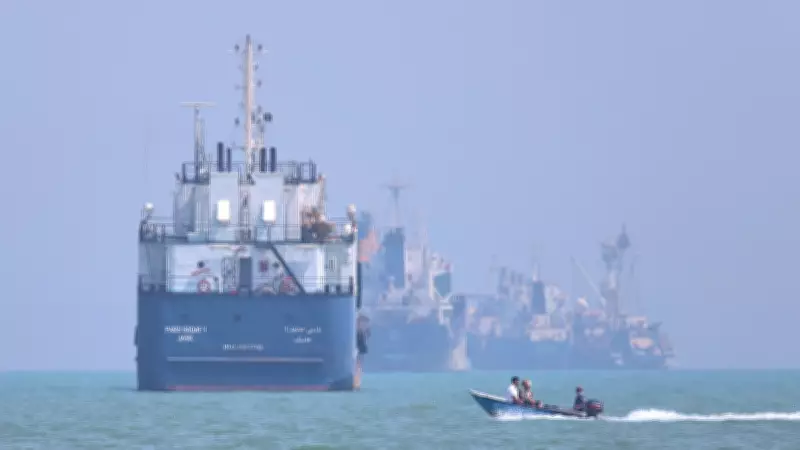
Iran's military has once again closed the Strait of Hormuz, a critical chokepoint for global oil shipments, citing ongoing Israeli attacks in Lebanon. The decision was announced on June 20, 2026, by the Iranian Revolutionary Guard Corps (IRGC), which stated that the closure would remain in effect until the aggression against Lebanon ceases.
Background of the Closure
The Strait of Hormuz, located between Oman and Iran, is a vital waterway through which approximately 20% of the world's oil passes. Previous closures have led to significant spikes in global oil prices and have drawn international condemnation. This latest closure comes amid heightened tensions between Iran and Israel, with the latter conducting a series of airstrikes in Lebanon targeting Hezbollah positions.
Iran's Justification
In a statement, the IRGC said, "In response to the continued Israeli aggression against the Lebanese people and the violation of international law, the Islamic Republic of Iran has decided to close the Strait of Hormuz to all maritime traffic. This measure will remain in place until the attacks stop." Iran has long been a supporter of Hezbollah, the Lebanese militant group, and views the Israeli strikes as a direct threat to its regional interests.

Global Reactions
The closure has drawn sharp reactions from the international community. The United States, which maintains a naval presence in the region, called the move "unacceptable" and warned of consequences. A State Department spokesperson said, "The closure of international waterways is a violation of maritime law and a threat to global economic stability. We are consulting with our allies on appropriate responses."
The European Union also condemned the action, urging Iran to reverse the decision immediately. Saudi Arabia and other Gulf states, which rely heavily on the strait for their oil exports, expressed deep concern and called for a diplomatic resolution.
Impact on Oil Markets
Oil prices surged by more than 10% following the announcement, with Brent crude trading above $90 per barrel. Analysts warn that a prolonged closure could lead to a global recession, as many countries depend on oil from the Middle East. Alternative routes, such as pipelines, are insufficient to compensate for the volume of oil that transits through Hormuz.
Historical Context
This is not the first time Iran has threatened or implemented a closure of the Strait of Hormuz. During the Iran-Iraq War in the 1980s, Iran targeted shipping in the strait. More recently, in 2019, Iran seized several tankers in the waterway amid tensions with the U.S. over sanctions. However, a full closure is rare and considered a drastic escalation.
Israeli and Lebanese Reactions
Israel has not officially commented on the closure, but defense officials have reportedly raised the alert level. Lebanon's government, meanwhile, has called for restraint from all parties, fearing that the conflict could spill over into its territory.
The Lebanese Foreign Ministry issued a statement saying, "Lebanon does not seek war and calls on all parties to respect international law and avoid actions that could lead to a wider regional conflict." Hezbollah, however, praised Iran's move, describing it as a "brave step in support of the resistance."
What's Next?
The situation remains fluid. Diplomatic efforts are underway, with the United Nations Security Council scheduled to hold an emergency meeting. Meanwhile, the U.S. Navy's Fifth Fleet, based in Bahrain, is reportedly repositioning assets to ensure freedom of navigation. The closure could also impact ongoing nuclear talks between Iran and world powers, which have been stalled for months.
As the world watches, the closure of the Strait of Hormuz underscores the fragility of global energy security and the potential for regional conflicts to have far-reaching economic consequences.