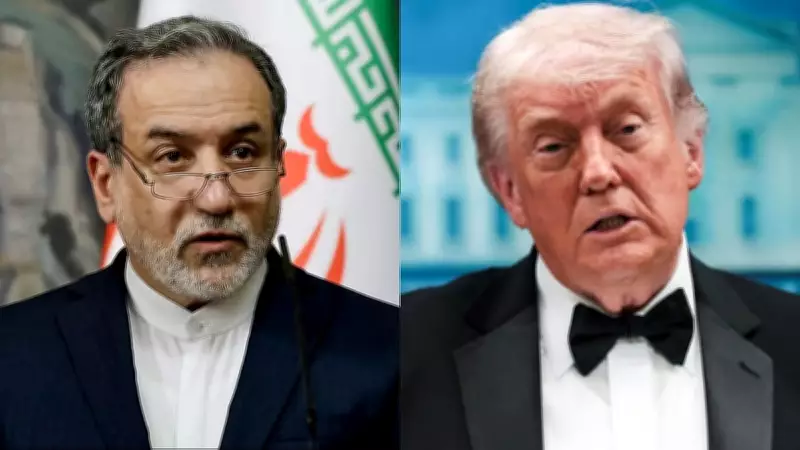
Iran's Foreign Minister Sets Condition for Nuclear Talks
Iranian Foreign Minister Abbas Araghchi stated on Thursday that final negotiations with the United States over the nuclear program will not commence if threats against Tehran continue. Speaking at a press conference in Tehran, Araghchi emphasized that any dialogue must be based on mutual respect and adherence to previously signed agreements.
"We have made it clear that talks will not begin under the shadow of threats. The United States must honor its signature and commitments," Araghchi said, referring to the 2015 Joint Comprehensive Plan of Action (JCPOA).
Background of Stalled Negotiations
The comments come amid stalled indirect talks between Iran and the US, mediated by European and Gulf diplomats, to revive the nuclear deal. The JCPOA, which limited Iran's uranium enrichment in exchange for sanctions relief, has been in jeopardy since the US withdrew in 2018 under President Donald Trump. Iran has since advanced its nuclear program, enriching uranium to 60% purity, close to weapons-grade levels.

According to the International Atomic Energy Agency (IAEA), Iran's stockpile of enriched uranium is now 27 times the limit set by the JCPOA. Araghchi warned that continued pressure could push Iran to further escalate its nuclear activities.
US Position and Regional Reactions
The US has not officially responded to Araghchi's remarks. However, a State Department spokesperson reiterated that Washington seeks a diplomatic solution but will not accept threats to its allies or international security. Gulf states, including Saudi Arabia and the UAE, have urged restraint and called for a comprehensive agreement that addresses Iran's ballistic missile program and regional proxies.
"The situation is fragile. Any miscalculation could lead to a broader conflict," said a Gulf diplomat who spoke on condition of anonymity.
Impact on Global Markets and Energy Security
The uncertainty surrounding nuclear talks has already impacted oil markets, with Brent crude prices fluctuating above $90 per barrel. Analysts warn that a breakdown in negotiations could lead to tighter sanctions and supply disruptions. Iran produces about 3.5 million barrels per day, and any reduction could strain global energy supplies.
"The market is pricing in a risk premium. If talks fail, we could see prices spike," said energy analyst Sarah Johnson of Global Oil Research.
Path Forward
Araghchi reiterated Iran's willingness to negotiate "in good faith" but insisted on guarantees that the US will not unilaterally withdraw again. He called for a verifiable mechanism to ensure sanctions relief and economic benefits for Iran. The next round of talks is expected in Vienna, though no date has been set.
"Iran has shown flexibility, but there are limits. The ball is in Washington's court," Araghchi concluded.