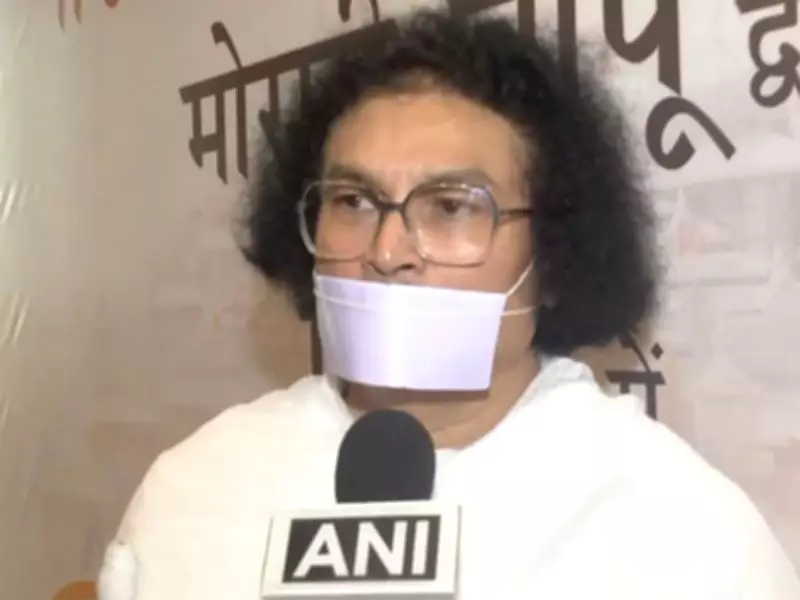
Iran has formally invited Indian Jain monk and spiritual leader Acharya Lokesh Muni to attend the state funeral of former Supreme Leader Ayatollah Seyyed Ali Khamenei in Tehran. The invitation was extended by the International Relations Department of the Office of the Supreme Leader, according to a statement from the spiritual leader's organization.
Formal Invitation and India's Official Representation
The invitation letter, signed by Mohsen Qummi, Director of the International Relations Department, conveyed the office's "highest compliments" and expressed the "distinct honour to extend a formal invitation" to Acharya Lokesh Muni, who founded the international social organization Ahimsa Vishwa Bharti. The letter announced Khamenei's death on 28 February 2026, referring to it as "Martyrdom (Shahadat)" and noted that a state funeral ceremony would be held in Tehran.
Emphasizing the historical ties between Iran and India, the invite stated: "In light of the profound historical and strategic ties that bind Iran and the Republic of India, I consider it a great honour to invite Your Excellency, as a distinguished guest of the Indian nation, to attend this solemn ceremony. Your presence would serve as a testament to the deep-rooted friendship and mutual respect between our two great ancient civilizations."

Meanwhile, Bihar Governor Lieutenant General (Retd) Syed Ata Hasnain and Minister of State for External Affairs Pabitra Margherita will represent India at the funeral ceremony, according to Iranian sources. The two dignitaries are expected to attend on behalf of the Government of India after President Masoud Pezeshkian sent a formal invitation to Prime Minister Narendra Modi.
Funeral Arrangements and Expected Turnout
Iranian state media Press TV reported that authorities have announced detailed arrangements for the two-day public farewell and funeral ceremonies, expecting one of the largest public gatherings in the country's history. Brigadier General Hassan Hassanzadeh, commander of the IRGC Tehran Command and head of the funeral arrangements headquarters, stated that the ceremonies will be held on July 4 and 5.
The public farewell ceremony will begin at 6 am local time on July 4 at Tehran's Imam Khomeini Grand Prayer Grounds and continue until 8 pm, with funeral prayers scheduled for the morning of July 5. Authorities decided against using a single procession route after technical assessments concluded that no individual street could safely accommodate the anticipated turnout, which preliminary estimates project at between 12 million and 15 million participants, with some assessments suggesting it could reach as high as 20 million.
Instead, the procession will move along a broader corridor across the capital, with vehicle access restricted within the zone. Hassanzadeh added that executive agencies, municipal authorities, healthcare providers, military and law enforcement organizations, cultural institutions, and public service bodies have all been mobilized for the event. Tehran's metro network and municipal bus fleet will operate at full capacity, while five dedicated service centres will operate around the Prayer Grounds to offer drinking water, meals, medical assistance, and other welfare services.
Broader Context: US-Iran Agreement and Succession
The funeral comes after a period of heightened tensions in West Asia. Strikes triggered a widespread conflict in the region, after which Khamenei's son, Mojtaba Khamenei, was appointed as the new Supreme Leader of Iran. Last month, the US and Iran agreed to a 14-point memorandum of understanding (MoU) aimed at ending hostilities and opening a 60-day dialogue window for technical talks, including discussions over the Strait of Hormuz and Iran's nuclear programme.