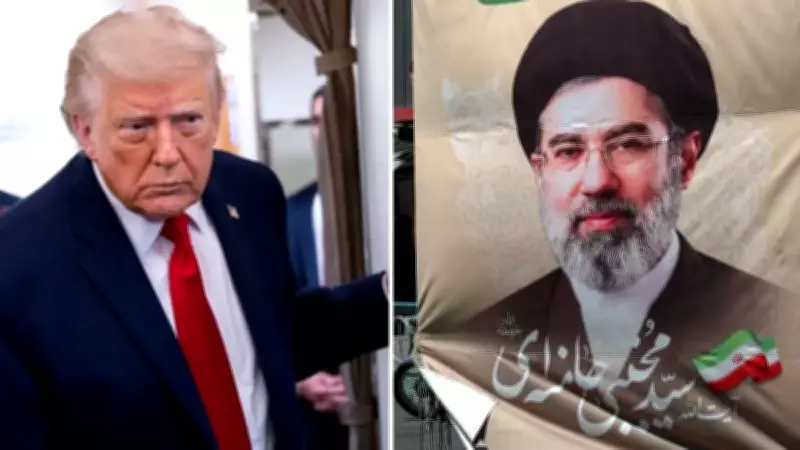
Former US President Donald Trump has issued a stark warning to Iran, stating that the country must permit international nuclear inspections or face the collapse of ongoing talks with the United States. In a statement that underscores the fragility of diplomatic efforts, Trump emphasized that no agreement would be possible without full verification of Iran's nuclear activities.
Trump's Firm Stance on Nuclear Inspections
Speaking to reporters, Trump declared, "Iran must allow nuclear inspections, or the talks will collapse. There will be no deal without verification." This statement comes amid renewed diplomatic efforts to revive the 2015 nuclear deal, formally known as the Joint Comprehensive Plan of Action (JCPOA), which Trump withdrew from in 2018. The former president's comments reflect a hardline approach that has characterized his administration's policy toward Iran.
Trump's warning highlights a key sticking point in negotiations: Iran's refusal to grant the International Atomic Energy Agency (IAEA) access to certain sites where undeclared nuclear activities may have taken place. According to diplomatic sources, the IAEA has reported that Iran has not provided credible explanations for traces of uranium found at multiple locations, raising concerns about the country's compliance with its nuclear obligations.

Impact on US-Iran Diplomatic Efforts
The collapse of talks would have significant implications for regional stability and global nuclear non-proliferation efforts. The Trump administration's maximum pressure campaign, which included crippling sanctions, aimed to force Iran to renegotiate the deal, but it also led to Tehran escalating its nuclear program beyond the limits set by the JCPOA. Iran now enriches uranium to 60% purity, close to weapons-grade levels, according to IAEA reports.
Analysts suggest that Trump's remarks may be intended to pressure Iran into making concessions, but they could also complicate the efforts of the Biden administration, which has sought to rejoin the deal. However, Trump's influence within the Republican Party means his stance could shape US policy if he returns to office.
Iran's Response and Regional Reactions
Iranian officials have dismissed Trump's ultimatum, with Foreign Ministry spokesman Saeed Khatibzadeh stating, "Iran will not negotiate under threats. Our nuclear program is peaceful, and we will only accept inspections within the framework of our legal obligations." Meanwhile, regional powers like Saudi Arabia and Israel have expressed concern over Iran's nuclear advances, with Israel warning it will take unilateral action if diplomatic efforts fail.
The European Union, which has mediated talks, urged both sides to show flexibility. A senior EU diplomat said, "The window for diplomacy is narrowing. It is crucial that both parties commit to a constructive dialogue to prevent further escalation."
What's at Stake?
According to experts, the collapse of talks could lead to a nuclear arms race in the Middle East, as other countries may seek to develop their own nuclear capabilities. Additionally, Iran's economy remains under severe strain from sanctions, but the country has shown resilience by boosting non-oil exports and forging closer ties with China and Russia. The US, on the other hand, faces pressure from allies to prevent Iran from acquiring a nuclear weapon.
Trump's warning serves as a reminder that the path to a diplomatic resolution remains fraught with challenges, and the coming weeks will be critical in determining whether a deal can be reached or if the situation will deteriorate further.