

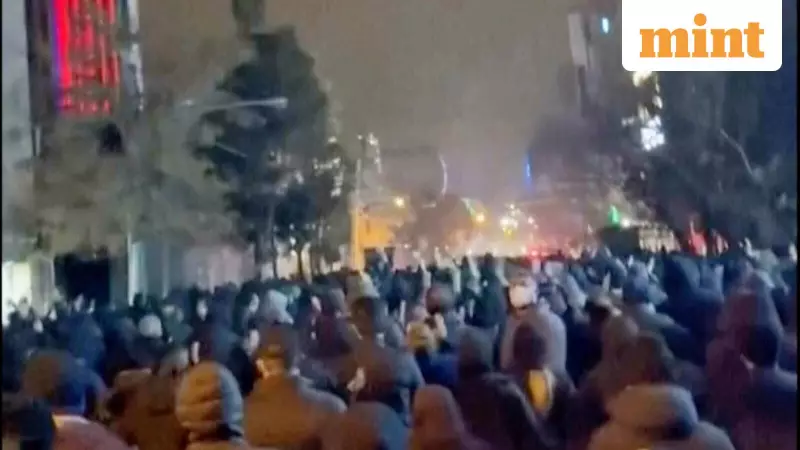
Protests in Iran reached a new peak on Saturday night, with loud anti-government slogans echoing through the streets of Tehran. This defiance came despite a nationwide internet shutdown and a severe crackdown by the government led by Supreme Leader Ayatollah Ali Khamenei.
Escalating Crackdown and Rising Death Toll
The demonstrations, now entering their third week, first erupted on 28 December 2025. The immediate trigger was the collapse of the national currency and growing economic difficulties faced by ordinary citizens. What began in the capital has now spread to approximately 180 cities, marking the largest wave of anti-government dissent in over three years.
Authorities initially appealed for calm and promised to address public grievances. However, as protests grew, the government adopted a much harsher stance. Security forces have responded with force, leading to significant casualties and arrests.

According to the rights group Human Rights Activists in Iran, at least 65 people have been killed by security forces since the unrest began. The group also reports that more than 2,300 individuals have been arrested. In a chilling warning, prosecutor Ali Salehi stated that protesters could face the death penalty, accusing them of waging "war against God."
Internet Blackout and International Tensions
In a bid to stifle coordination and news flow, the Khamenei government imposed a comprehensive internet blackout across the country on Friday. This digital siege remained in effect through the weekend, severely limiting communication.
The situation has drawn sharp international focus, particularly from the United States. US President Donald Trump has repeatedly warned of a potential American intervention, stating Iran is "looking at FREEDOM, perhaps like never before." Reports on Sunday indicated that the US is actively drawing up plans for potential military action, including airstrikes against targets in Tehran.
Adding weight to these reports, retired US Army colonel and military analyst Douglas McGregor claimed there are signs of a massive military build-up in the Middle East. "US strikes on Iran look to be imminent," he stated.
Defiance from Exile and Government Accusations
From abroad, Iran's exiled Crown Prince Reza Pahlavi has actively encouraged the protesters. On Friday, he praised the demonstrations and called for larger crowds to gather and seize city centres. Verified videos cited by AFP news agency showed crowds heeding this call in northern Tehran on Saturday.
The Iranian government, however, remains defiant. It has consistently blamed the United States and Israel for orchestrating the unrest. In a speech on Friday, Ayatollah Khamenei accused President Trump of having hands "stained with the blood of Iranians" and predicted his downfall, comparing him to tyrants of history.
As the standoff continues, protesters are expected to gather again on Sunday, responding to calls for sustained demonstrations. The world watches closely as Iran faces one of its most significant domestic challenges in years, with the grim prospect of further violence and international confrontation looming large.






