

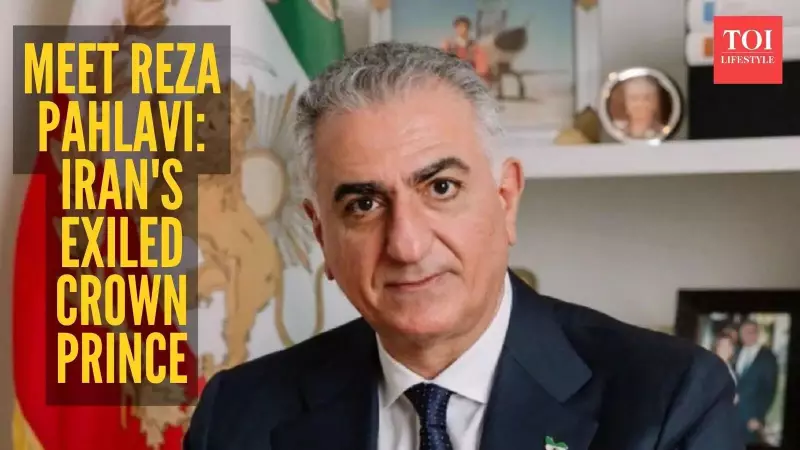
Iran is currently witnessing one of its most intense periods of public unrest in recent years. Citizens have taken to the streets in anger, voicing their dissent and directly challenging the ruling establishment. Amid this tumultuous backdrop, a name from the nation's past has resurfaced with surprising prominence: Reza Pahlavi.
Who is Reza Pahlavi? The Last Crown Prince
Reza Pahlavi is the son of Iran's final monarch, Mohammad Reza Pahlavi. Born into immense privilege on 31 October 1960, his early life was a world of palaces, royal ceremonies, and global diplomacy, far removed from the everyday experiences of ordinary Iranians. He was groomed as the future king, a destiny that was abruptly erased by the 1979 Islamic Revolution, which overthrew the monarchy and transformed Iran into an Islamic Republic.
His childhood anecdotes, like playing loud rock music during a visit by US President Jimmy Carter, highlight the insulated royal bubble. However, that world was crumbling due to widespread public anger over repression, economic inequality, and the feared secret police, SAVAK. The teenage Reza was in the United States for flight training when the revolution culminated, forcing his father into exile. He has never returned to live in Iran since.

A Life in Exile and a Shifting Political Role
For over four decades, Reza Pahlavi has lived abroad, primarily in the United States, splitting his time between Los Angeles and Washington, DC. Upon his father's death, monarchist loyalists symbolically declared him the Shah on his 20th birthday, a title without a throne. From exile, he has consistently sought a place in Iran's political narrative.
In the 1980s, he used clandestine television broadcasts to address Iranians. Today, social media is his primary platform. His videos and statements gain rapid traction, especially during waves of domestic protest. His messaging has evolved; he no longer prominently advocates for a restoration of the absolute monarchy. Instead, he speaks of democracy, reform, and a potential constitutional monarchy, emphasizing that Iran's future should be decided by its people through a referendum.
Why is He a Figure of Controversy?
Support for Reza Pahlavi is far from universal. His resurgence exposes deep divisions within Iranian society and the diaspora. Many Iranians have not forgotten the darker aspects of his father's rule—the political persecution, lack of freedoms, and stark social divides. For younger generations born after the revolution, the Pahlavi name does not inherently hold nostalgic appeal.
Critics argue he is out of touch with the harsh realities of life in modern Iran. His established ties to Western powers and his open support for Israel are also significant points of contention for many Iranians. The current protest chants that reference the Shah's era are often interpreted less as a call for monarchical return and more as a visceral rejection of the present system.
At 65 years old, Reza Pahlavi remains a distant, symbolic figure. Whether he will ever return to Iran, let alone lead it, is an unanswered question. For now, he endures as the exiled crown prince, his life perpetually connected to a homeland he left as a youth but which has never left him.






