Iran Rejects IAEA Inspection of Nuclear Facilities Damaged in Strikes
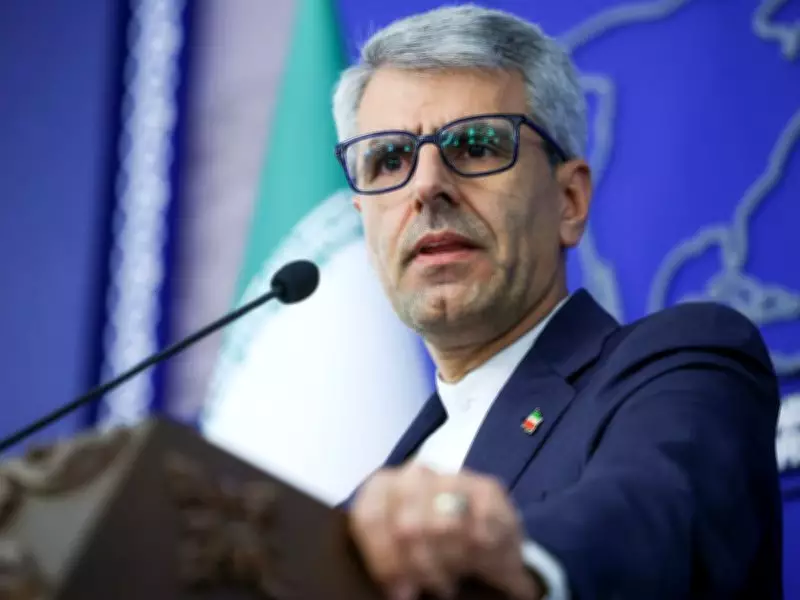
Iranian Foreign Ministry spokesperson Esmail Baghaei stated on Tuesday that Tehran has no plans to permit the International Atomic Energy Agency (IAEA) to inspect nuclear facilities damaged during US and Israeli strikes. He also confirmed that no meeting occurred with IAEA Director General Rafael Mariano Grossi.
Speaking at a press conference, Baghaei said, "We neither had a meeting with Grossi nor do we have any program for the Agency to inspect the nuclear facilities damaged as a result of the US and Israel attack. In this regard, no protocol exists."
Oil Export Permits and Nuclear Negotiations
Regarding Iran's energy exports, Baghaei announced that permits for selling oil and petrochemical products were issued and became enforceable on Monday. He also addressed nuclear negotiations with the United States, stating that talks did not continue after threats from US President Donald Trump. "We did not continue the negotiations after Trump's threats. We faced offensive threats from American officials during the break between negotiations, and after that, the quadrilateral meeting was not held. The continuation of the discussions was only the exchange of messages through intermediaries," Baghaei said.

Frozen Assets and Defense Capabilities
On Iran's frozen assets abroad, the spokesperson asserted that Tehran has access to the funds and will determine their use according to national interests. "Regarding Iran's released assets, we will make decisions in whatever way is in the best interest of the country; there are no restrictions in this regard; Iran's frozen assets are accessible so that Iran can freely make any use it needs to procure the goods intended for the country," he said. Baghaei also ruled out any discussion of Iran's defense capabilities in future negotiations. "Absolutely, the issue of Iran's defensive and missile capabilities has not been, in any way, part of our discussions, nor will it ever be a subject for negotiation with any party," he added.
Trump's Stance on Nuclear Compliance
Earlier on Monday, US President Donald Trump stated he would take necessary action if Iran fails to adhere to any agreement following technical talks in Switzerland, emphasizing that preventing Tehran from acquiring a nuclear weapon is more important than global economic fallout. Speaking at the White House, Trump said, "If Iran doesn't live up to their agreement, or if they're not behaving, I will do what I have to do." He added that continued cooperation from Tehran would ensure stability. Addressing concerns about global economic impact, Trump rejected that military action could trigger a depression, saying, "Well, not the way I'm doing it. It's not going to cause depression." He argued that nuclear proliferation poses a more severe threat, stating, "If they don't abide by -- well, nuclear weapons supersede depression. Depression is real bad... a nuclear weapon will cause depression much more quickly." Trump reiterated that military options remain on the table if Iran does not comply.
Iran's Readiness for Inspections? Contradictory Signals
Trump's remarks came after he claimed that Iran is prepared to accept extensive weapons inspections as part of diplomatic efforts, citing a post on Truth Social where he wrote, "Everybody is fully aware that Iran will agree to have Major Weapons Inspections in order to ensure 'Nuclear Honesty' long into the future." However, Baghaei's comments directly contradict this assertion, indicating a clear divergence between US and Iranian positions on nuclear inspections.