Regional Tensions Explode as Iran Retaliates Against US-Israel Strikes
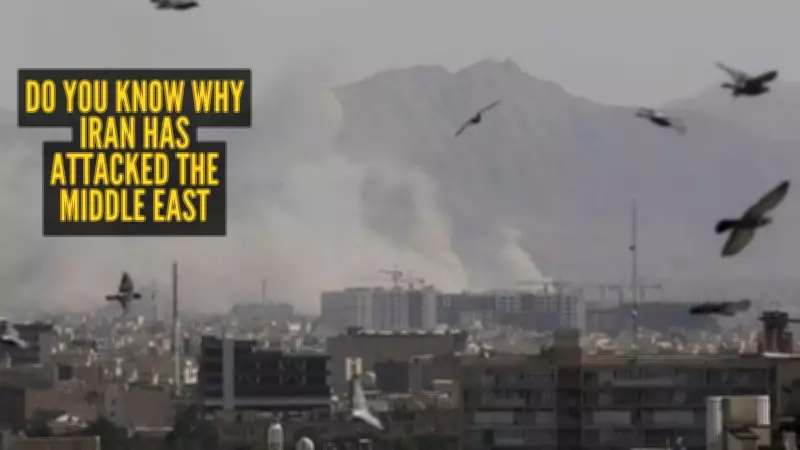
The Middle East awoke to a morning of extraordinary tension as explosions echoed across multiple nations. Citizens checking their phones found alerts about missile attacks, while videos circulated showing air defense systems lighting up night skies. Commercial flights abruptly changed routes, and one urgent question dominated conversations: Why is Iran attacking now?
The Trigger: February 28 Strikes Inside Iran
The immediate catalyst traces back to February 28, 2026, when coordinated military operations by the United States and Israel targeted strategic defense and security locations within Iranian territory. Washington and Tel Aviv framed these strikes as preventive measures against growing security threats.
Iran perceived the operation very differently. Tehran condemned it as a direct assault on national sovereignty, with Iranian media reporting significant damage and casualties. This crossed a critical threshold that had previously contained hostilities to indirect confrontations.

Iran's Regional Response: Missiles Across Borders
Retaliation came swiftly as Iran launched ballistic missiles and drones targeting multiple Middle Eastern countries. Explosions and interceptions were reported across the United Arab Emirates, Qatar, Bahrain, Kuwait, and Jordan.
This broader targeting strategy reflects Iran's military calculus. Several Gulf nations host American military bases that provide crucial surveillance, logistics, and regional defense coordination. From Tehran's perspective, these installations form an integrated network supporting US-Israeli military power in the region.
Iran's message extended beyond simple revenge. The strikes signaled that any attack on Iranian territory would trigger consequences across the entire region, suddenly making a geopolitical conflict tangible for civilians far removed from the original confrontation.
Gulf Nations Caught in the Crossfire
For Gulf states, this escalation creates profound discomfort. Many have carefully balanced strong security ties with Washington against cautious diplomatic outreach to Tehran. Geography, however, denies easy neutrality.
With American forces already deployed throughout the region, Iran's decision to retaliate against this wider network inevitably drew these nations into the crisis. They now confront heightened security alerts, anxious residents, and disrupted airspace—a familiar Middle Eastern reality where proximity guarantees involvement.
Long-Simmering Rivalries Boil Over
Today's escalation represents the culmination of years of tension. Iran and Israel have engaged in what analysts term a shadow war, fought through covert operations, cyberattacks, targeted killings, and proxy battles across neighboring countries.
Israel views Iran's missile program and nuclear ambitions as existential threats, while Tehran accuses Israel and the United States of attempting to destabilize its government and weaken regional influence. Previous confrontations remained below the threshold of open warfare, but that restraint now appears to be evaporating.
The Nuclear Question Looms Large
Hovering behind the immediate crisis is Iran's nuclear program. Diplomatic negotiations earlier this year stalled over uranium enrichment limits, inspections protocols, and sanctions relief. With trust already fragile, the failure of diplomacy has paved the way for military decisions.
Israel maintains that diplomacy alone cannot prevent Iran from developing nuclear weapons capability, while Tehran insists its nuclear program serves peaceful civilian purposes. This deep-seated suspicion fuels the current escalation.
Strategic Calculations Behind Iran's Response
Iran's retaliation serves multiple strategic purposes. Domestically, leaders must demonstrate strength following foreign attacks to avoid perceptions of weakness. Strategically, the response aims to restore deterrence by signaling that assaults on Iranian territory will always be answered.

By spreading its response across several countries, Iran complicates the military situation for opponents, transforming what might have been a bilateral confrontation into a regional crisis. This approach, however, significantly increases risks of miscalculation that could rapidly draw additional nations into the conflict.
Global Reactions and Economic Implications
International responses have been cautious yet clearly concerned. World leaders have urged restraint while airlines reroute flights and energy markets react sharply to potential disruptions in oil supplies and global trade routes.
Even distant nations recognize that Middle Eastern instability rarely remains contained, with potential consequences for global security and economic stability.
Why This Escalation Feels Different
While the region has experienced numerous crises, analysts note this confrontation carries unprecedented risks due to the direct involvement of three major military powers: Iran, Israel, and the United States. All possess advanced military capabilities and powerful international alliances.
Previous tensions played out indirectly through proxy groups, but current military actions represent open state-to-state confrontation, dramatically raising the stakes for regional and global security.
Uncertain Path Forward
The immediate future remains uncertain. Iran has declared its retaliation complete, while Israel has moved forces to high alert and the United States reinforces defensive positions while publicly calling for calm.
Behind closed doors, diplomatic efforts are undoubtedly underway, often intensifying precisely when situations appear closest to spiraling out of control. The coming days will prove critical in determining whether this crisis stabilizes or expands further.
The Bigger Picture
Ultimately, Iran's attacks across the Middle East represent both retaliation for specific strikes and an attempt to re-establish deterrence. The broader narrative, however, extends far beyond immediate events.
Long-standing rivalries, nuclear tensions, regional alliances, and global power politics are converging simultaneously. When such powerful forces collide, conflicts rarely remain contained, spreading across borders, economies, and ordinary lives.
The region now holds its breath, waiting to discover whether this represents a limited exchange or the beginning of a much larger, more dangerous confrontation.