

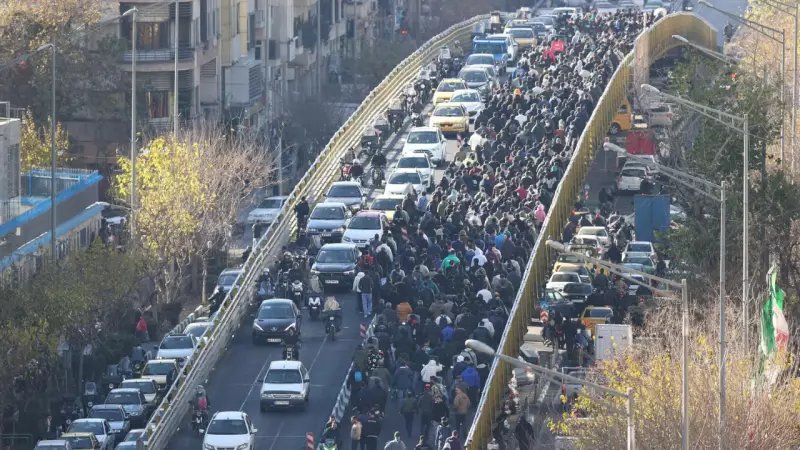
Iran's top judicial official has issued a stern warning, stating there will be "no leniency" towards rioters, even as the country grapples with widespread demonstrations driven by economic hardship that have now entered their second week.
Judiciary Draws Line Between Protest and Violence
Gholamhossein Mohseni Ejei, the head of Iran's judiciary, instructed prosecutors nationwide to act decisively against rioters and their supporters. His comments, carried by the judiciary's Mizan news agency, came with a critical distinction. Ejei asserted that Iran "listens to the protesters and their criticism" but differentiates them sharply from those involved in violence. This statement attempts to separate public discontent over economic conditions from acts deemed as destabilizing the state.
Protests Spread from Economic Grievances
The unrest began on December 30 with shopkeepers striking against soaring prices and a stagnating economy, a trigger point being the Iranian rial hitting a record low against the US dollar. The protests have since expanded geographically and evolved to include political demands. Official data confirms demonstrations in 25 of Iran's 31 provinces, across at least 45 cities, with a focus on small and medium-sized towns in the west. Local clashes have resulted in the deaths of at least 12 people, including security personnel, and reports of property damage.

While state-sponsored Fars news agency noted a decrease in the scale of gatherings by Monday, the underlying economic pressure remains severe. The rial has lost over a third of its value in the past year, with double-digit inflation crippling purchasing power. On Monday, it traded around 1.4 million to the dollar on the informal market, a drastic fall from approximately 770,000 a year ago.
International Reactions and Internal Warnings
The protests have drawn attention from Iran's adversaries. US President Donald Trump warned that if Iran started "killing people," it would get "hit very hard by the United States." Israeli Prime Minister Benjamin Netanyahu expressed solidarity with the Iranian people's "aspirations for freedom."
Iranian officials have been quick to blame external forces. Foreign ministry spokesman Esmail Baqaei accused Israel of trying to exploit the situation to sow division. Similarly, prosecutor general Mohammad Movahedi-Azad warned last week against "externally designed scenarios" and promised a decisive response.
In a rare admission, President Masoud Pezeshkian recently urged citizens to look inward, suggesting they should not blame the US for all problems but rather the country's own leadership. However, years of crippling US sanctions have undoubtedly left the economy fragile, with current output expected to be negative. The government's public stance remains dual: a conciliatory tone on economic complaints paired with a firm promise to crush any disorder.






