

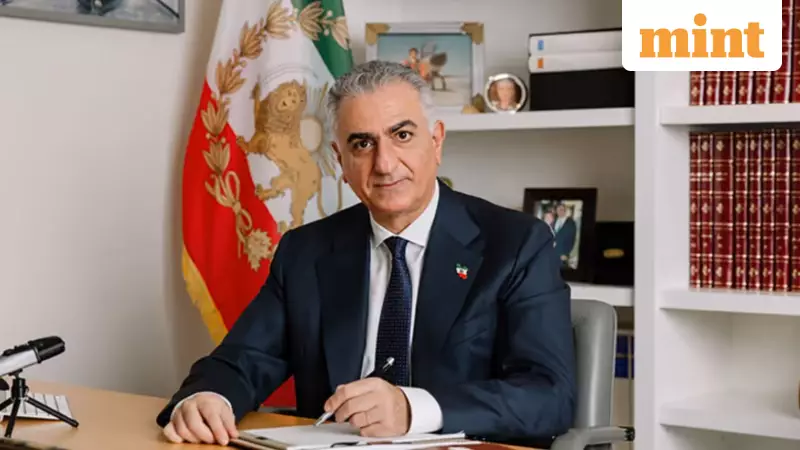
Iran's exiled Crown Prince, Reza Pahlavi, has positioned himself as a central figure in the ongoing nationwide protests against the ruling theocracy led by Supreme Leader Ayatollah Khamenei. The unrest, ignited by the country's crumbling economy and a collapsing currency, has seen Pahlavi repeatedly urging citizens to take to the streets.
Pahlavi's Calls for a "United Front" Against the Regime
In a series of messages on social media platform X, the opposition leader has been vocal in his criticism. On December 30, Pahlavi stated that the nation's economic decline would persist as long as the current regime holds power. He emphasized the need for greater solidarity during this critical time.
"I call on all segments of society to join your fellow compatriots in the streets and raise the cry for the fall of this system," Pahlavi declared in his post. In a subsequent appeal on Thursday, he addressed the "great nation of Iran," noting that the world's eyes are upon them. He encouraged people to march as a united front to voice their demands.

He further advised protesters to swell their numbers, arguing that larger crowds would weaken the regime's capacity for repression. Pahlavi advocates for a change in government through non-violent civil disobedience.
Who is the Exiled Crown Prince Reza Pahlavi?
Reza Pahlavi is the son of Iran's last Shah, Mohammed Reza Pahlavi, and Empress Farah Pahlavi. He was officially named Crown Prince in 1967. Born in Tehran on October 31, 1960, he has lived in exile since 1979.
In 1978, at age 17, he left Iran for jet fighter training in the United States Air Force. The subsequent Islamic Revolution prevented his return, as Islamists overthrew the monarchy and established the current theocratic regime.
An accomplished pilot, Pahlavi even volunteered to serve as a fighter pilot during the Iran-Iraq War, but the clerical government rejected his offer. He holds a degree in political science from the University of Southern California and is the author of three books on Iran's political future.
He is married to Yasmine Etemad-Amini, and the couple has three daughters: Noor, Iman, and Farah. While he enjoys support among sections of the Iranian diaspora, his call for a return to monarchy faces uncertain popularity within Iran itself.
Nationwide Unrest Over a Failing Economy
Iran has been gripped by widespread demonstrations since December 28, directly challenging the Islamic Republic over its dire economic management. The protests have turned deadly and have led to mass arrests.
According to the Associated Press, at least 42 people have been killed and more than 2,270 detained in the crackdown on protests.
The economic trigger is stark. The Iranian rial has plummeted to a historic low, trading at approximately 1.42 million to the US dollar. This free fall, exacerbated by the return of UN sanctions in September over Iran's atomic program, has sent prices for food and basic necessities soaring.
The country is also recovering from a 12-day conflict with Israel in June, which involved US airstrikes on Iranian nuclear sites. Adding to the tension, a recent warning from former US President Donald Trump about repercussions if Iran violently suppresses protests has gained new attention following the capture of Tehran's ally, Venezuelan President Nicolas Maduro, by American troops.






