

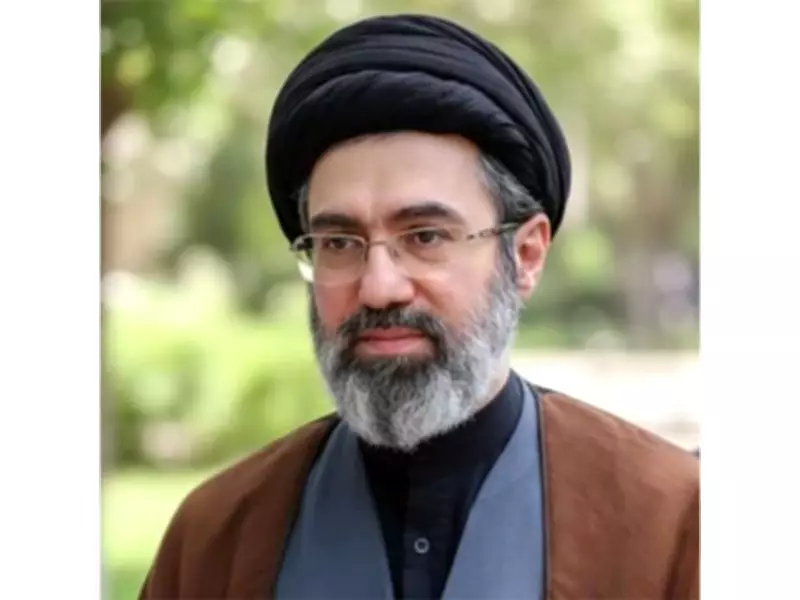
Iran's New Leader Issues Stark Warning: Revenge and Hormuz Blockade on the Table
In a defiant and aggressive address that has sent shockwaves through international diplomatic circles, Iran's newly appointed leader, Mojtaba Khamenei, has made two critical declarations. He has vowed to exact revenge for perceived threats against his family and issued a stark warning about potentially blocking the strategic Strait of Hormuz. This move signals a significant escalation in regional tensions and underscores the hardline stance expected from the new leadership in Tehran.
A Vow of Retribution for Familial Threats
Mojtaba Khamenei, who recently assumed a prominent leadership role following the death of his father, the late Supreme Leader Ayatollah Ali Khamenei, directly addressed what he described as "grave threats" directed at his family. In his speech, he emphasized that any aggression or intimidation targeting his relatives would not go unanswered. "We will not hesitate to retaliate with full force against those who dare threaten the sanctity of our family," Khamenei stated, framing the issue as a matter of national honor and personal duty. Analysts interpret this as a clear message to both domestic rivals and foreign adversaries, indicating that the new leader intends to project strength and resolve from the outset of his tenure.
The Strait of Hormuz: A Lever of Power
Perhaps more alarming for global energy markets and international security is Khamenei's explicit threat regarding the Strait of Hormuz. This narrow waterway is a critical chokepoint for global oil shipments, with approximately one-fifth of the world's petroleum passing through it. Khamenei warned that Iran is prepared to blockade the strait if it perceives its national interests to be under severe threat. "The Strait of Hormuz is not just a passageway; it is a vital artery for the global economy, and we hold the key," he declared, highlighting Iran's strategic leverage in the region. Such a blockade could trigger a major international crisis, disrupting oil supplies and potentially leading to military confrontations.

Regional and Global Implications
The dual threats from Iran's new leader have immediate and far-reaching consequences:
- Regional Stability: Neighboring Gulf states and international powers, including the United States, are likely to heighten their military preparedness in response. The threat to Hormuz directly challenges the security of key US allies like Saudi Arabia and the UAE.
- Global Economy: Any disruption to traffic through the Strait of Hormuz could cause a spike in global oil prices, impacting economies worldwide and exacerbating inflationary pressures.
- Diplomatic Relations: Khamenei's aggressive posture complicates ongoing diplomatic efforts, such as negotiations over Iran's nuclear program. It suggests a shift towards a more confrontational foreign policy that could isolate Iran further.
Mojtaba Khamenei's statements mark a pivotal moment in Middle Eastern geopolitics. By combining personal vendetta with a strategic military threat, he has positioned himself as a leader willing to use all tools at his disposal to assert Iran's influence. The international community now faces the challenge of navigating this heightened tension, with the specter of conflict looming over one of the world's most vital maritime routes. Observers warn that the coming weeks will be critical in determining whether these threats translate into action or remain as rhetorical posturing in a volatile region.






