

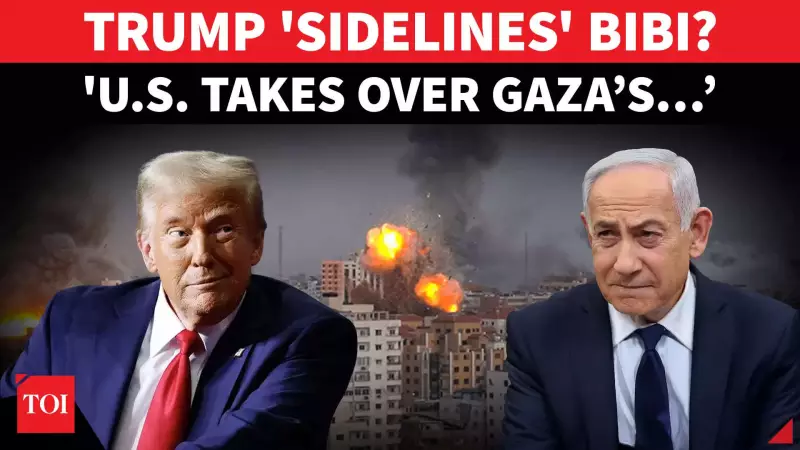
A significant shift in power dynamics is occurring within the Middle East peace process, leaving Israeli Prime Minister Benjamin Netanyahu in an unexpectedly diminished position. Following his acceptance of U.S. President Donald Trump's ceasefire proposal, Netanyahu now finds himself marginalized at his own command center.
US Assumes Command in Gaza Operations
Recent reports emerging from the Civil-Military Coordination Centre (CMCC) located in Kiryat Gat reveal a dramatic development: the United States has assumed complete authority over implementing the Gaza ceasefire. This arrangement has relegated Israel to what sources describe as a secondary, contractor-like role rather than an equal partner in the process.
According to an Israeli official quoted by Times of Israel, Washington is now making all critical decisions regarding both humanitarian efforts and military coordination in the region. The official confirmed that American authorities are "calling the shots" while Israeli forces merely execute the predetermined plans without significant input in the decision-making process.

International Stabilization Force Imminent
President Trump himself has confirmed that an international stabilization force could be deployed to Gaza in the very near future. During his remarks, the American leader emphasized that this development represents what he characterized as a "strong peace" rather than a "tentative" arrangement.
The announcement suggests a more permanent international presence in the region, potentially altering the geopolitical landscape significantly. This move appears to be part of a broader strategy to ensure lasting stability in the conflict-ridden area.
Political Implications for Netanyahu
This development represents a substantial political setback for Prime Minister Netanyahu, who now faces the reality of diminished Israeli sovereignty over security matters in Gaza. The arrangement effectively places crucial decisions about the region's future in American hands, marking a notable departure from previous Israeli-led operations.
The situation raises important questions about the long-term implications for Israel's autonomy in managing security concerns within its immediate geographical sphere. The shift comes at a time when regional tensions remain high and multiple stakeholders continue to navigate the complex Middle Eastern political landscape.
Observers note that this power redistribution could have far-reaching consequences for future negotiations and the overall balance of power in the region. The development underscores the evolving nature of international involvement in the longstanding Israeli-Palestinian conflict.






