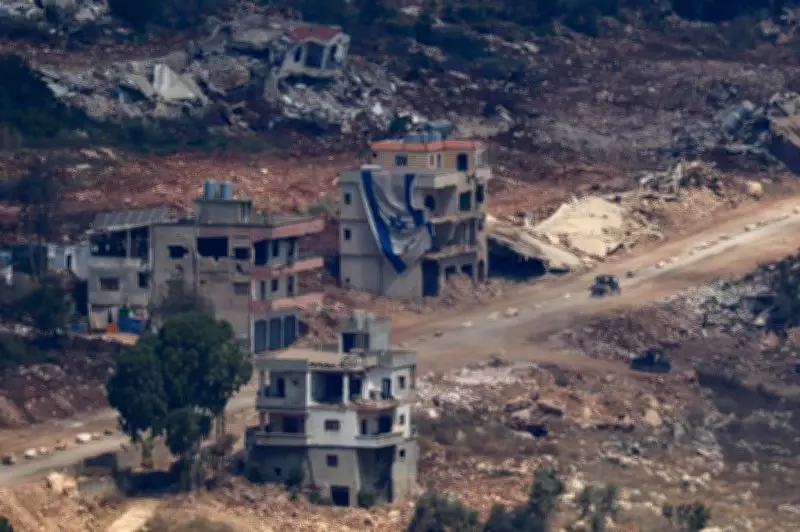
Israel Launches Drone Strike in Southern Lebanon
Israel struck southern Lebanon on Saturday, just a day after the two countries signed a US-brokered security arrangement aimed at easing tensions along their border following months of hostilities. Lebanon's state news agency reported that an Israeli drone struck in Nabatieh al-Fawqa, an area outside a security zone shown on a map published by Israel of an expanded zone its troops control in southern Lebanon.
The Israeli military confirmed it carried out the strike using a drone, stating that no Israeli troops were in the immediate vicinity. It claimed the strike targeted an individual who posed a threat to its forces, but provided no further details or evidence to support this assertion.
Hezbollah Rejects Framework Agreement
Hezbollah chief Naim Qassem vehemently rejected the Israel-Lebanon framework agreement signed in Washington, calling it "null," a "humiliation," and a surrender of sovereignty. He argued that the agreement should be replaced by the Iran-US memorandum. Qassem added that any attempt to link Israel's withdrawal from southern Lebanon to the group's disarmament crossed "red lines."

More than a million Lebanese individuals have been displaced from their homes by the conflict, which has run parallel to the wider Iran war. Hezbollah and Iran claim that Washington pledged to end hostilities in Lebanon as part of its memorandum of understanding signed two weeks ago to end the broader conflict.
Details of the Security Arrangement
The framework agreed on Friday provides for a phased Israeli withdrawal from some parts of southern Lebanon, alongside the deployment of the Lebanese army. However, Israeli forces would be permitted to remain in an expanded security zone for the time being, pending further implementation. Qassem stated: "We did not leave the battlefield in the most difficult circumstances, and we will not leave it."
He emphasized that the Iran-US memorandum of understanding reached earlier this month, which guarantees Lebanon's territorial integrity, should serve as the basis for ending the conflict, rather than Friday's Washington agreement. The situation remains tense as both sides hold firm to their positions, with the risk of further escalation looming.