Japanese Firms Pledge $12.5 Billion in 120 Agreements at India Summit
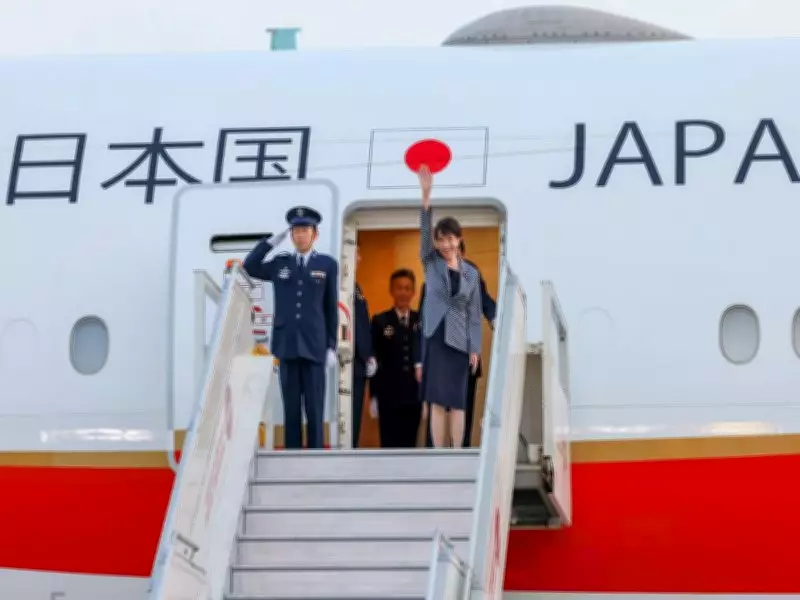
Over 150 Japanese companies are set to invest $12.5 billion (approximately 2 trillion yen) into the Indian market through about 120 cooperation agreements during the 16th Japan-India Annual Summit. The summit coincides with Japanese Prime Minister Sanae Takaichi's first official visit to New Delhi on Thursday.
Government and Private Sector Collaboration
Japan's Deputy Chief Cabinet Secretary Masanao Ozaki, who arrived in New Delhi with PM Takaichi, announced on X that the Japan-India Economic Forum will feature participation from over 150 companies. He stated, "In addition to strengthening government-to-government relations in areas such as security and economic security, I hope this will serve as a trigger for concrete and remarkable development in Japan-India economic relations."
According to a report by The Yomiuri Shimbun, the initiatives aim to deepen Japan's footprint in India's expanding market. The draft joint statement from the summit reveals plans to intensify partnerships on maritime and energy security.

Key Agreements Across Sectors
The finalized agreements cover a wide range of sectors. Fujifilm will collaborate on a semiconductor materials plant, Suzuki will initiate a biogas facility project, and Japanese and Indian artificial intelligence startups will form joint ventures for application development. This 2 trillion yen injection aligns with a bilateral commitment from last year targeting 10 trillion yen in private Japanese investments in India over a decade, as per The Yomiuri Shimbun.
Defense and Strategic Cooperation
The draft joint statement solidifies last year's accord and calls for "promoting mutually complementary cooperation between Japan and India," with emphasis on economic security. It welcomes the evolution of PM Takaichi's "Free and Open Indo-Pacific (FOIP)" concept. In defense, the draft appreciates ongoing maritime security collaboration and recognizes Japan's April updates to operational guidelines for transferring defense equipment. It also outlines plans for a Japan-India Foreign and Defence Ministerial Meeting (2+2) before year-end.
Addressing China's Rare Earth Export Curbs
The document explicitly notes deep apprehensions regarding nonmarket policies and economic coercion, referencing China's recent export restrictions on rare earth elements. Both nations pledge to bolster energy supply integrity through joint stockpiling initiatives.
Support for SMEs and Infrastructure
The draft emphasizes support for small and medium-sized enterprises entering the Indian market, backs improvements to India's domestic business environment, and advocates for cooperation on bringing JR East's E10 series Shinkansen train to India. On technology, it states that "promoting innovation, including AI, is extremely important in further expanding the foundation for cooperation."
PM Takaichi's Remarks
Before her departure, PM Takaichi highlighted the private sector's role, saying, "By uniting government and private sectors, we aim to broaden the scope of Japan-India cooperation and realise a strong economy." She also noted that regional security, especially in the Indo-Pacific, would feature prominently in discussions with Prime Minister Modi.
Upon arrival in Delhi, Takaichi posted on X: "In discussions with Prime Minister Modi, centering on urgent issues including economic security and energy security, we will aim to deepen the strategic cooperative relationship between Japan and India... and further strengthen the Japan-India 'Special Strategic Global Partnership'."
Background of Bilateral Ties
India and Japan elevated their relationship to a Special Strategic and Global Partnership in 2014 and have steadily expanded cooperation across defense, infrastructure, trade, digital technologies, clean energy, mobility, healthcare, and people-to-people exchanges.