

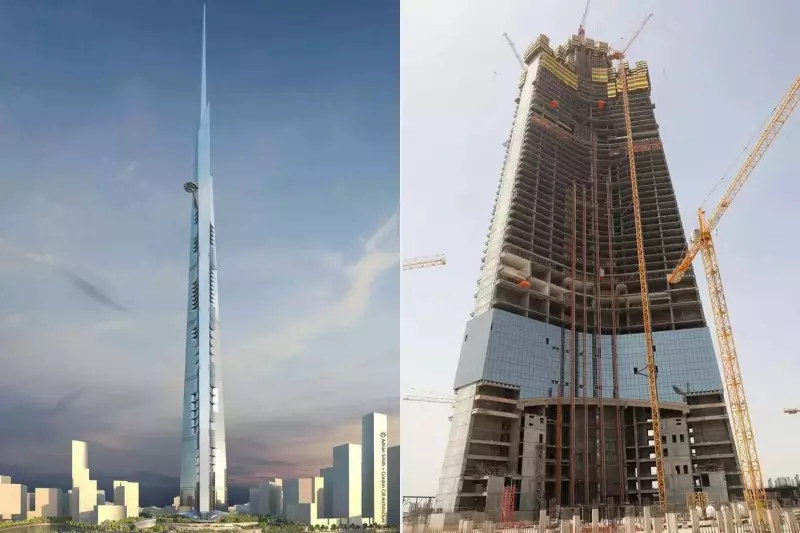
Saudi Arabia is embarking on an unprecedented architectural quest, aiming to redefine global skylines with the Jeddah Tower. This megastructure, rising on the Red Sea coast, is poised to seize the title of the world's tallest building from Dubai's iconic Burj Khalifa. More than a mere feat of height, the tower embodies the Kingdom's ambitious vision for a diversified, future-oriented economy under its Vision 2030 blueprint.
Jeddah Tower: A Vertical City in the Making
At the heart of the massive Jeddah Economic City development, the Jeddah Tower is designed to be a self-contained vertical metropolis. With construction having resumed in the 2024–2025 period after previous delays, the project is now targeting completion in the late 2020s, contingent on progress. The tower's planned specifications are staggering: it will soar to over 1,000 metres (3,280 feet), making it the first human-made structure to break the one-kilometre barrier. It is expected to house more than 130 storeys.
Developed with significant investment from major Saudi backers and estimated to cost over $1 billion for the tower alone, the project is a cornerstone of Saudi Arabia's strategy to attract global business and tourism, generate employment, and establish itself as a leader in mega-infrastructure. The interior of this vertical city is planned to include a luxury hotel, high-end residential apartments with panoramic views, premium office spaces, retail zones, and the world's highest observation deck, surpassing the current record held by Burj Khalifa.

Engineering Marvels for an Extreme Height
Designed by Adrian Smith + Gordon Gill Architecture, the firm behind the Burj Khalifa, Jeddah Tower incorporates cutting-edge engineering to overcome the immense challenges of its scale. Key features include a tapered, aerodynamic shape to mitigate wind forces, a robust reinforced concrete and steel core for stability, and advanced foundation systems built for extreme loads. The building will be equipped with dozens of high-speed elevators, among the fastest ever built, and integrated smart technologies for energy efficiency, safety, and climate control at record altitudes.
Managing wind pressure, material stress, and vertical transportation at such an extreme height makes the Jeddah Tower one of the most complex engineering endeavours ever undertaken. Its design seamlessly blends luxury with functionality, aiming to set new benchmarks for sustainable and intelligent skyscraper design.
Redefining Ambition and Global Symbolism
The Jeddah Tower's quest to overtake the 828-metre-tall Burj Khalifa by nearly 200 metres is about more than just a rivalry for height supremacy. It signals a new era of architectural leadership in the Middle East and reflects Saudi Arabia's growing confidence on the world stage. The project moves beyond mere record-breaking for prestige; it is intended as a city-shaping development that will anchor an entire urban ecosystem around it.
Upon completion, the Jeddah Tower will stand as a powerful, visible symbol of the Kingdom's transformation, a testament to human ambition written in steel and concrete against the sky. It represents a definitive statement of intent, showcasing how Saudi Arabia is leveraging grand design, monumental engineering, and visionary scale to reshape its cities and its global image for generations to come.






