

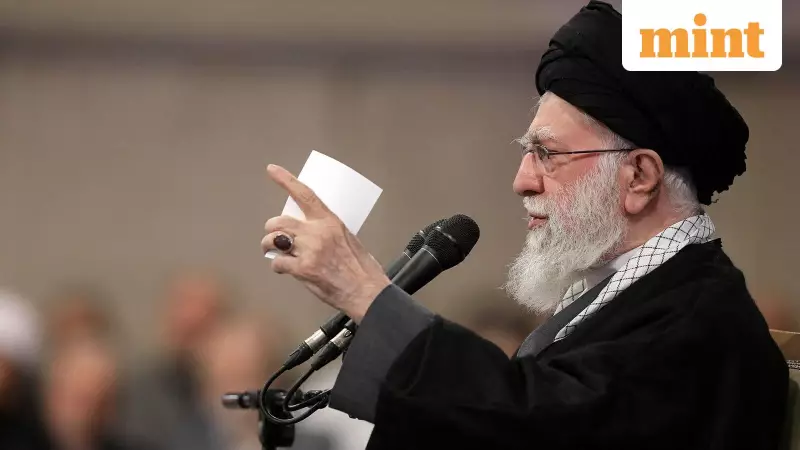
In a stunning revelation, intelligence reports indicate that Iran's Supreme Leader, Ayatollah Ali Khamenei, has prepared a detailed contingency plan to evacuate Tehran should nationwide protests overwhelm his security forces. This 'Plan B' involves a potential escape to a foreign nation, with Russia emerging as the most likely sanctuary.
The Escape Blueprint for Iran's Leadership
According to a report by The Times citing an intelligence source, the 86-year-old leader has formulated a strategy for himself and a close inner circle of up to 20 aides and family members. This group is said to include his son, Mojtaba Khamenei, who is widely considered his nominated heir apparent. The plan would be activated if Khamenei perceives that the army or security services are deserting, defecting, or refusing orders to suppress dissent.
The intelligence source revealed that preparations are already underway, involving the gathering of assets, properties abroad, and cash to ensure a smooth and safe passage out of the country. "They have plotted an exit route out of Tehran should they feel the need to escape," the source stated.

Why Russia is the Presumed Destination
Former Israeli intelligence officer Beni Sabti, in analysis provided to the publication, identified Moscow as Khamenei's most probable destination. Sabti emphasized that Russia offers both political protection and a precedent for sheltering embattled allies. "There is no other place for him," Sabti concluded.
This contingency plan is reportedly modelled on the escape of Syrian President Bashar al-Assad, a key Iranian ally. In a similar move in December 2024, Assad fled Damascus for Moscow as opposition forces advanced on the capital, setting a template that Tehran's leadership appears to be following.
Mounting Pressure Amid Widespread Protests
The disclosure of this escape plan comes at a critical time for the Islamic Republic. Iran has been rocked by a new wave of nationwide protests driven by severe economic hardship. Demonstrators across the country have accused security forces, including the Islamic Revolutionary Guard Corps (IRGC), Basij militia, police, and army, of using live ammunition, tear gas, and water cannons to crush the unrest.
Khamenei's authority as the supreme leader overrides all state institutions, including the army and judiciary. His rule heavily depends on the loyalty of the IRGC as his primary power base. Any sign of disobedience or fragmentation within these security forces would pose an existential threat to his decades-long grip on power.
Adding to the concerns are reports about Khamenei's health. A Western intelligence agency's psychological profile, reviewed by the news outlet, suggests the leader has appeared "weaker, both mentally and physically" since the 12-day war with Israel last year. He has made rare public appearances since then and has been conspicuously absent during the latest protest wave.
The assessment also noted that during the Israel conflict, Khamenei spent extended periods in a bunker to avoid assassination, behaviour described as reflecting an "obsession with survival." The existence of a detailed escape plan appears to be a logical extension of this survival instinct, now facing its most serious domestic challenge in years.






