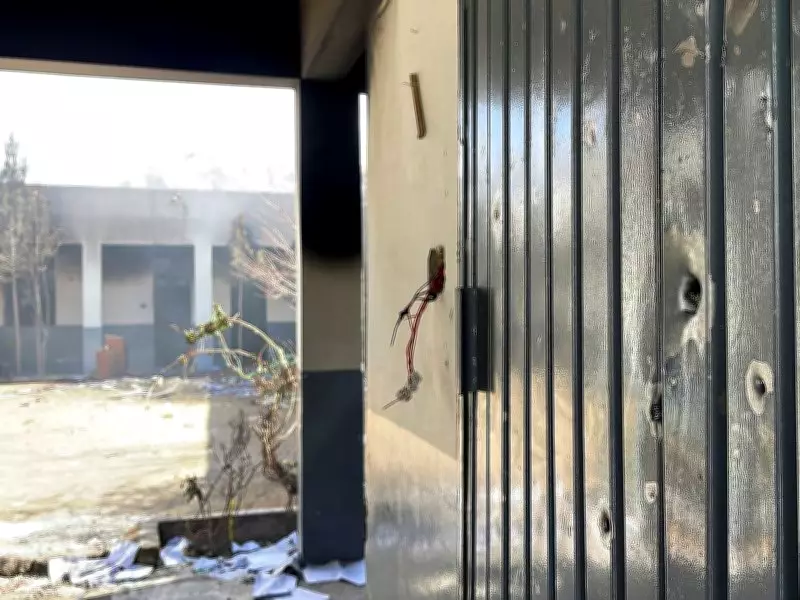
Pakistan conducted intelligence-based ground operations along its border with Afghanistan on Sunday, resulting in the deaths of 29 individuals, as reported by Dawn. The strikes were a direct response to a series of terrorist incidents within Pakistan, particularly an attack on the Sindh Rangers headquarters in Karachi that occurred the previous night.
Cross-Border Operation Details
Pakistan's Information Minister Attaullah Tarar confirmed on Sunday night that the security forces executed a "well planned intelligence based ground operation" targeting militant infrastructure along the Pakistan-Afghan border. The operation involved both ground forces and strikes in the border region. Tarar explicitly linked the kinetic action to "recent multiple terrorist incidents inside Pakistan against the innocent people of Khyber Pakhtunkhwa, Balochistan and Pakistan Rangers (Sindh) Camp, Karachi." According to Dawn, the operation was launched to dismantle terrorist networks operating from across the border.
Karachi Attack: Casualties and Response
The trigger for the cross-border strikes was an attack on the provincial headquarters of the Pakistan Sindh Rangers in Karachi's Gulistan-i-Jauhar locality on Saturday night. Sindh Inspector General Javed Alam Odho reported that three Pakistani paramilitary personnel and three terrorists were killed in the assault. The terrorists rammed the main gate of the facility with their vehicle, and authorities initially could not confirm whether a blast had also occurred. Odho stated that a "mopping-up operation" was underway, and the area had been sealed by Special Security Unit (SSU) commandos, Anti-Terrorist Force (ATF), and Rangers personnel. Police Surgeon Summaiya Syed told Dawn that one injured paramilitary trooper was brought to the hospital with gunshot wounds to the leg.

Immediate Aftermath and Claims of Responsibility
Law enforcers rushed to the scene after heavy firing and an explosion were reported. The general area was cordoned off by police. Rescue 1122 Sindh dispatched teams from its central command and control centre after receiving reports of an explosion near Gulistan-e-Jauhar Block 5. An affiliate of Jamaat-ul-Ahrar, a splinter group of the Tehreek-e-Taliban Pakistan (TTP) also known as the Pakistani Taliban, claimed responsibility for the attack late on Saturday, according to Al Jazeera. The group stated that nine attackers participated in the operation.
Broader Security Context
The Karachi attack and subsequent cross-border strikes come amid a surge in violence targeting Pakistan's security forces. According to Al Jazeera, security personnel have been increasingly targeted across the country. The TTP and its affiliates have intensified operations in recent months, particularly in Khyber Pakhtunkhwa and Balochistan provinces. The cross-border operation underscores Pakistan's strategy of conducting ground and kinetic actions against militant hideouts along the Afghanistan border, which has historically been a flashpoint for cross-border infiltration and attacks.
Regional Implications
The strikes along the Afghanistan border are likely to further strain relations between Pakistan and Afghanistan, as Kabul has consistently denied allowing its territory to be used for attacks against Pakistan. The operation also highlights the ongoing challenge of militant groups operating in the border regions, which remain a key security concern for both countries. The Pakistani government has repeatedly called on Afghanistan to take action against TTP and affiliated groups, but cross-border operations remain a contentious issue.