

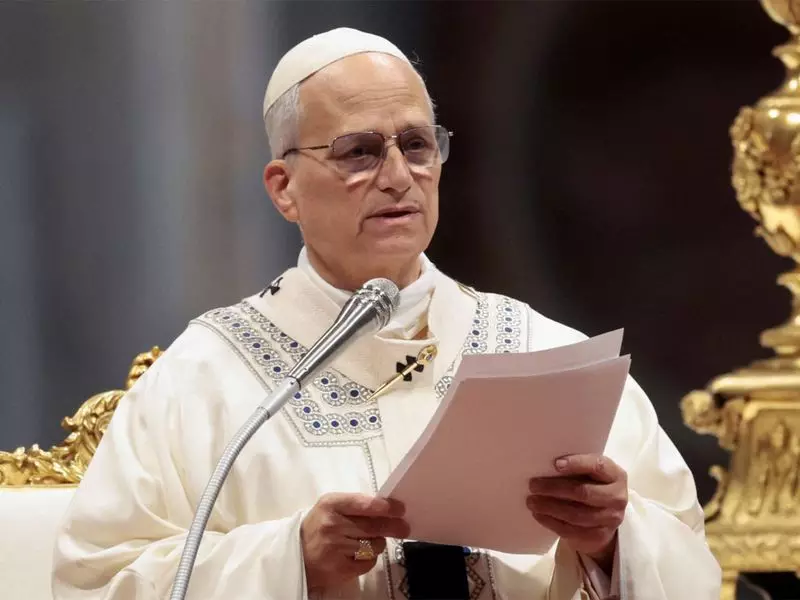
In a powerful address from St. Peter's Square, Pope Francis has once again raised his voice for global peace, making urgent appeals for an end to the devastating conflicts in the Middle East and Ukraine. The pontiff's call for dialogue and reconciliation comes at a time of heightened international tension, including recent violent unrest within Iran.
A Plea for Global Harmony Amidst Conflict
During his traditional Sunday Angelus prayer on January 7, 2024, the Pope expressed deep sorrow over the ongoing wars causing immense human suffering. He specifically highlighted the dire situations in the Holy Land and in Ukraine, where violence continues to claim lives and displace millions. His message was one of profound empathy for all victims of war, regardless of their nationality or faith.
The pontiff emphasized that war is always a defeat for humanity, stating that it represents a failure of politics and a surrender to the basest human instincts. He implored political leaders and those in positions of power to prioritize the path of negotiation and peace over the use of arms. "Let us not forget this," he urged the faithful gathered in the square and those listening worldwide.

Addressing the Shadow of Violence in Iran
While the Pope's primary focus remained on the major international conflicts, his appeal for peace also resonated against the backdrop of rising internal violence in Iran. The context of his message was sharpened by twin bomb blasts in the city of Kerman on January 3, which marked one of the deadliest attacks in the country's recent history.
Although the Pope did not explicitly name Iran in his public address, his overarching theme of rejecting violence as a solution directly relates to the tragic events there. The explosions, which targeted a ceremony commemorating the anniversary of General Qasem Soleimani's death, resulted in significant casualties and heightened regional anxieties.
The Vatican's longstanding position advocates for peaceful resolution of disputes and condemns acts of terrorism, aligning with the Pope's broader call for an end to cycles of retaliation and bloodshed everywhere.
The Vatican's Role as a Voice for Peace
Pope Francis has consistently positioned the Holy See as a diplomatic force for peace. His latest appeals reinforce the Vatican's active engagement in global affairs, seeking to mediate and encourage dialogue in seemingly intractable conflicts. The Pope's strategy involves direct diplomatic outreach combined with these public, spiritual appeals to the conscience of the world.
The challenges are immense. The war in Ukraine, now approaching its second year, has created a severe humanitarian crisis in Europe. Simultaneously, the conflict between Israel and Hamas in Gaza has ignited fears of a wider regional war in the Middle East. The Pope's dual focus underscores the interconnected nature of global stability and the universal human cost of war.
The core of the Pope's message is a plea to see the humanity in one's adversary. He often speaks of the "futility of victory" when it is built upon ruins and graves. For the faithful, his words are a call to prayer; for world leaders, they are a moral challenge to choose courageously the difficult path of peace.
As the world enters a new year, the Pontiff's hopeful yet somber reminder serves as a crucial benchmark for international relations: true strength lies not in military might, but in the unwavering commitment to dialogue, human dignity, and lasting peace for all nations.






