

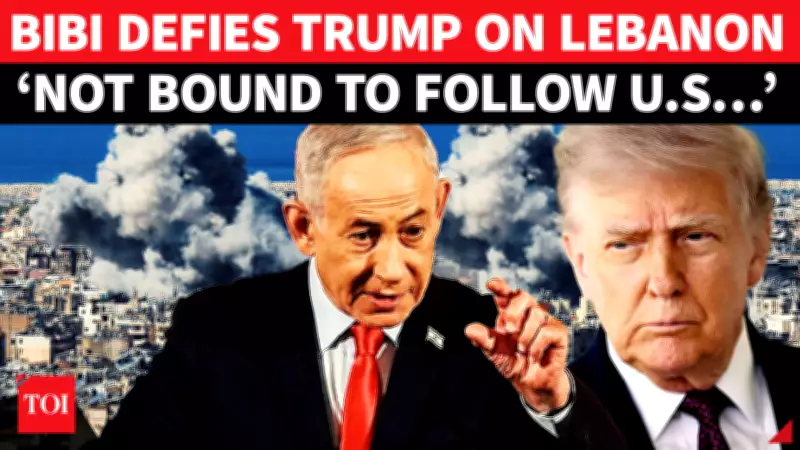
Reports indicate that Israeli Prime Minister Benjamin Netanyahu has rejected key Lebanon-related provisions linked to the emerging US-Iran agreement and has vowed that Israeli forces will continue operations against Hezbollah. This dispute arises as President Donald Trump pushes a landmark peace deal with Tehran following marathon negotiations. Israeli strikes in southern Lebanon and Trump's public criticism of Netanyahu have exposed deep divisions over the future of regional security. The disagreement could become a major challenge to efforts aimed at securing lasting peace in the region.
Background of the Disagreement
The rift between Trump and Netanyahu centers on the inclusion of a Lebanon clause in the US-Iran deal. Netanyahu's refusal to retreat from Lebanon and his rejection of this clause have heightened tensions between the two allies. Trump, who has been advocating for a comprehensive agreement with Iran, views Netanyahu's stance as an obstacle to peace.
Israeli Operations Continue
Despite the dispute, Israeli forces have continued their operations against Hezbollah in southern Lebanon. These actions have drawn criticism from Trump, who has publicly questioned Netanyahu's commitment to regional stability. The ongoing strikes have also raised concerns about the potential for a broader conflict.

Trump's Public Criticism
President Trump has not hesitated to voice his displeasure with Netanyahu's decisions. In recent statements, Trump has accused Netanyahu of undermining the US-Iran deal and jeopardizing the prospects for peace. This public rebuke marks a significant departure from the traditionally close relationship between the two leaders.
Regional Implications
The deepening rift between Trump and Netanyahu has significant implications for the Middle East. The US-Iran deal, which aims to curb Iran's nuclear program and stabilize the region, now faces an uncertain future. Meanwhile, Israel's continued operations in Lebanon threaten to escalate tensions with Hezbollah and other regional actors.
Hezbollah's Response
Hezbollah has responded to Israeli operations with increased rhetoric and military posturing. The group has vowed to retaliate against any Israeli aggression, raising the specter of a new conflict. The US-Iran deal, which includes provisions for Lebanon, was intended to address such tensions, but Netanyahu's rejection has complicated these efforts.
International Reactions
The international community has watched the Trump-Netanyahu rift with concern. European allies, in particular, have urged both sides to find common ground and avoid actions that could destabilize the region. The United Nations has also called for restraint and dialogue.
Future Outlook
The coming weeks will be critical in determining the fate of the US-Iran deal and the broader security landscape in the Middle East. Trump and Netanyahu must navigate their differences to prevent a complete breakdown in relations. The Lebanon clause remains a key sticking point, and its resolution will likely shape the future of US-Israel relations and regional peace efforts.






