

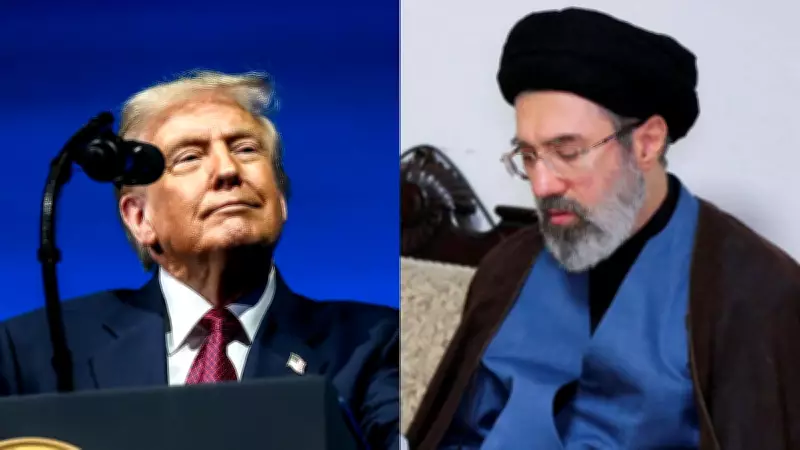
Trump Signals Willingness for Iran Negotiations, Highlights Conditional Approach
In a notable development in US foreign policy, President Donald Trump has publicly stated that talks with Iran are a possibility, but he firmly underscored that any such diplomatic engagement would hinge entirely on the terms set forth. This announcement comes at a time of heightened tensions in the Middle East, where Iran's nuclear ambitions and regional activities have long been a point of contention for the United States and its allies.
Conditional Diplomacy: Terms as the Deciding Factor
President Trump's remarks reflect a strategic shift, suggesting a potential openness to dialogue that contrasts with his administration's previous hardline stance. However, he made it clear that the United States would only consider negotiations if the conditions are advantageous. "Talks with Iran are possible, but it all depends on the terms," Trump emphasized, indicating that any agreement must align with American interests, particularly regarding nuclear non-proliferation and regional stability.
This conditional approach highlights the administration's focus on securing a deal that addresses key concerns, such as Iran's ballistic missile program and its support for proxy groups in the region. The president's statement signals a willingness to explore diplomatic avenues, but without compromising on core security priorities.

Context of Ongoing Middle East Tensions
The possibility of talks emerges against a backdrop of persistent friction between the US and Iran, exacerbated by the US withdrawal from the 2015 nuclear deal and subsequent sanctions. Recent incidents, including attacks on oil facilities and maritime confrontations, have further strained relations, making Trump's comments a potential turning point in a volatile geopolitical landscape.
Analysts note that this move could be aimed at de-escalating tensions while maintaining pressure on Iran to come to the negotiating table under favorable terms. The international community, including European partners, has been urging a diplomatic resolution to avoid further conflict in the region.
Implications for US Foreign Policy and Global Stability
If talks materialize, they could have significant implications for Middle East dynamics and global security. Key points to consider include:
- Nuclear Deal Revisions: Any new agreement might seek to address perceived flaws in the previous accord, with stricter enforcement mechanisms.
- Regional Influence: Negotiations could impact Iran's role in conflicts across the Middle East, potentially leading to reduced proxy warfare.
- Alliance Dynamics: US allies, such as Israel and Saudi Arabia, will be closely monitoring developments, as their security concerns are directly tied to Iran's actions.
President Trump's conditional openness to talks underscores a pragmatic yet firm stance, balancing the desire for diplomacy with the need to safeguard national interests. As the situation evolves, the terms of any potential dialogue will be critical in shaping the future of US-Iran relations and broader Middle East peace efforts.






