

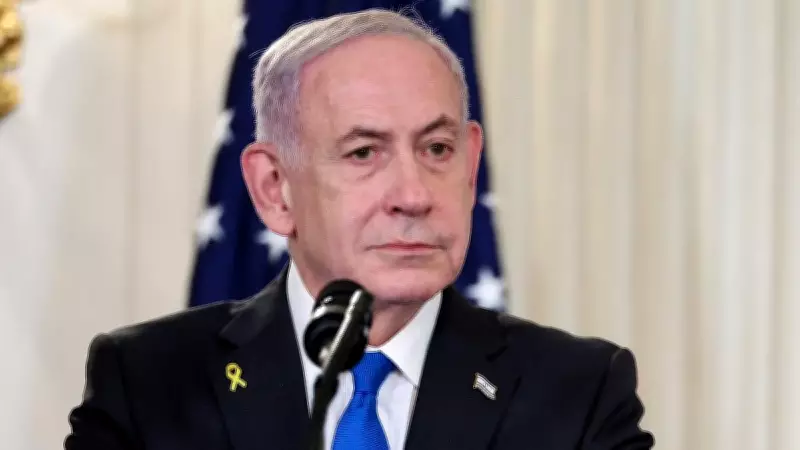
An emerging US-Iran deal could leave Israeli Prime Minister Benjamin Netanyahu as the biggest political casualty, according to a report citing an Iranian official. The official said Netanyahu's efforts to expand the Abraham Accords have been blunted, with several countries now seeking a place in an evolving Iran-aligned framework.
Shift in Regional Dynamics
The potential agreement between Washington and Tehran marks a significant shift in Middle Eastern geopolitics. For years, Netanyahu positioned Israel as a key US ally against Iran, championing the Abraham Accords to normalize relations with Arab states. However, the Iranian official, speaking to Reuters on condition of anonymity, stated that the tide has turned. "Netanyahu's push to expand the Abraham Accords has been blunted," the official said. "Several countries are now seeking a place in an emerging Iran-aligned framework."
Impact on Israel's Strategy
This development threatens to isolate Israel diplomatically. The Abraham Accords, brokered by the Trump administration in 2020, saw Israel establish ties with the United Arab Emirates, Bahrain, Sudan, and Morocco. Netanyahu has since sought to bring Saudi Arabia into the fold. But the prospect of a US-Iran deal has altered calculations. According to the report, nations that once aligned with Washington and Jerusalem are now recalibrating their positions to accommodate a resurgent Iran.

An Israeli official, who declined to be named, expressed concern: "We are closely monitoring the situation. Any agreement that legitimizes Iran's nuclear program or regional influence is a direct threat to our security." The official added that Israel would take all necessary steps to protect its interests.
Broader Implications
The US-Iran deal, still under negotiation, is expected to address Tehran's nuclear ambitions and its role in conflicts across the region. Critics in Israel argue that it could embolden Iran's proxies, including Hezbollah and Hamas. However, proponents suggest it might reduce tensions and open new diplomatic channels.
The Iranian official emphasized that the emerging framework is not anti-Israel but rather pro-stability. "We are not seeking conflict. We want a balanced region where all nations can coexist," the official said. "But the era of one country dominating the agenda is over."
As talks progress, Netanyahu faces mounting domestic pressure. His coalition government has staked its reputation on confronting Iran. A deal that sidelines Israel could weaken his political standing and embolden opponents. Analysts suggest that if the agreement is finalized, Netanyahu may be forced to either accept a new reality or take unilateral action, risking further isolation.
The report concludes that the US-Iran deal, if realized, could fundamentally reshape the Middle East, with Netanyahu emerging as the biggest loser in the new order.






