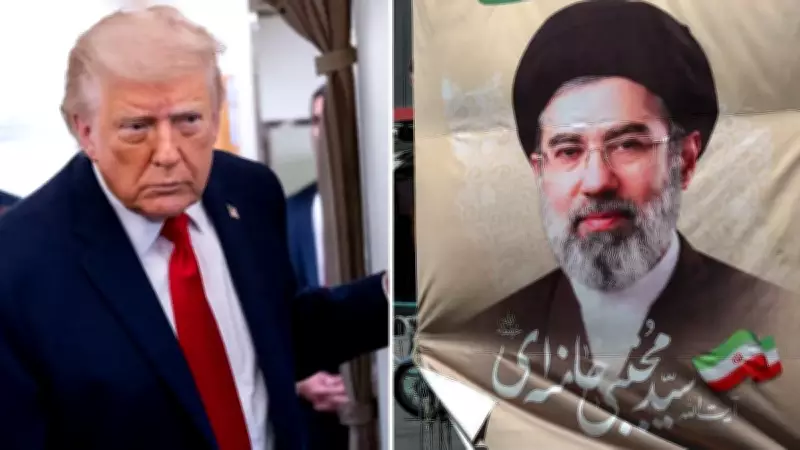
The United States and Iran have reached a historic 14-point peace agreement, marking a significant shift in Middle Eastern geopolitics. The deal, announced on June 18, 2026, includes key provisions such as Iran's commitment to abandon nuclear weapons, ensuring free navigation through the Strait of Hormuz, and the establishment of a $300 billion development fund.
Key Points of the Agreement
The full text of the agreement outlines several critical measures:
- Nuclear Disarmament: Iran agrees to dismantle its nuclear weapons program and submit to international inspections. The International Atomic Energy Agency (IAEA) will have unrestricted access to all nuclear facilities.
- Freedom of Navigation: Both nations guarantee the free flow of maritime traffic through the Strait of Hormuz, a vital waterway for global oil shipments. Iran pledges not to blockade or threaten commercial vessels.
- Economic Cooperation: A $300 billion fund will be established to support infrastructure projects, humanitarian aid, and economic development in Iran and neighboring countries. The fund will be managed jointly by the US and Iran with oversight from the United Nations.
- Sanctions Relief: The US agrees to lift all economic sanctions imposed on Iran since 2018, allowing Iran to re-enter global markets and access frozen assets.
- Regional Security: Both countries commit to reducing military tensions in the Persian Gulf, including a mutual agreement to limit naval exercises and avoid confrontations.
- Human Rights: Iran pledges to improve its human rights record, including releasing political prisoners and ensuring freedom of speech and assembly.
- Counterterrorism: Joint efforts to combat terrorist groups in the Middle East, with a focus on ISIS and Al-Qaeda affiliates.
- Diplomatic Relations: Reopening of embassies in Washington, D.C., and Tehran, and the exchange of ambassadors within six months.
- Arms Control: Iran agrees to halt ballistic missile development and limit its missile range to 300 kilometers.
- Energy Cooperation: US companies will be allowed to invest in Iran's oil and gas sector, with profits shared equitably.
- Environmental Protection: A joint task force to address environmental issues in the Persian Gulf, including oil spill prevention and marine conservation.
- Cultural Exchange: Programs to promote people-to-people ties, including student exchanges and tourism initiatives.
- Dispute Resolution: A bilateral commission to resolve any disagreements arising from the agreement, with arbitration by the International Court of Justice if needed.
- Implementation Timeline: The deal will be implemented in phases over three years, with the first phase focusing on nuclear disarmament and sanctions relief.
Reactions and Implications
World leaders have welcomed the agreement. UN Secretary-General called it a "landmark achievement for peace and stability." Iran's President hailed the deal as a victory for diplomacy, while US President stated it ends decades of hostility. Analysts predict the deal will lower oil prices and boost global economic growth. However, some critics argue that Iran cannot be trusted and that the $300 billion fund is too generous. The agreement is expected to reshape alliances in the Middle East, with Saudi Arabia and Israel expressing cautious optimism.