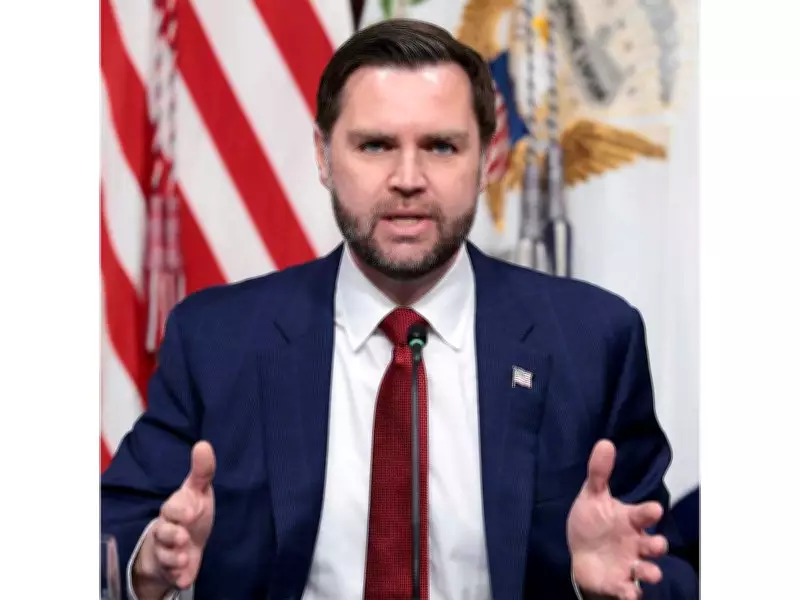
Fresh uncertainty has clouded the future of the US-Iran peace process after a crucial round of negotiations scheduled in Switzerland was postponed following US Vice-President JD Vance’s decision to cancel his trip, with no fresh date announced for the talks.
Vance had just a day ago criticised Israel for “weird panic” and “freakout” over the agreement struck between the US and Iran. “What is your exact proposal? You’re a country of nine million people. You can’t just kill your way out of solving every single national security problem that you have,” Vance had said.
He had said President Donald Trump was Israel’s only ally, in a sharp rebuke that referenced the billions in US defence aid the country receives.

Officials said the talks between the US and Iran were called off after intense fighting between Israel and Hezbollah in southern Lebanon.
The US-Iran meeting, due to be held on Friday at the Burgenstock resort in central Switzerland, was expected to mark the beginning of a 60-day process aimed at converting a recently agreed framework between Washington and Tehran into a comprehensive long-term settlement. The Swiss authorities, however, confirmed that the talks had been called off, while reiterating their willingness to host future negotiations.
The postponement came just hours after the White House announced that Vance would not travel to Switzerland. Officially, the delay was attributed to logistical difficulties, but reports suggested the decision was also influenced by growing tensions in the region and uncertainty over Iran’s participation.
Iranian media had earlier indicated that Tehran was seeking visible signs of US commitment to implementing the preliminary agreement before moving ahead with the next phase of talks. Questions over the safety and timing of travel for Iranian officials also reportedly complicated the process.
The Burgenstock meeting had acquired considerable diplomatic significance. Switzerland had made elaborate security arrangements, including the temporary closure of airspace and deployment of military personnel to assist the civil authorities. The venue had been chosen with the support of mediators Pakistan and Qatar, both of which have played an active role in facilitating contacts between Washington and Tehran.
The talks were intended to build on a memorandum of understanding reached earlier this week. Under the proposed roadmap, negotiators were expected to address issues relating to Iran’s nuclear programme, sanctions relief and broader regional security concerns.
Vance, who has emerged as the public face of the Trump administration’s outreach to Tehran, had earlier defended the agreement and stressed that Iran would have to fulfil its commitments before receiving any benefits.
The diplomatic pause has coincided with renewed instability in West Asia. Escalating hostilities between Israel and Hezbollah in Lebanon have raised concerns that regional developments could derail efforts to consolidate the fragile understanding reached between the US and Iran.
Despite the setback, neither side has formally abandoned the peace process. The White House has maintained that the US delegation remains prepared to begin technical discussions at the earliest opportunity, while Switzerland has kept the door open for future negotiations.
Meanwhile, as per CNN, Israel and Hezbollah have agreed to renew a ceasefire. However, neither side had confirmed it till the filing of this report.