

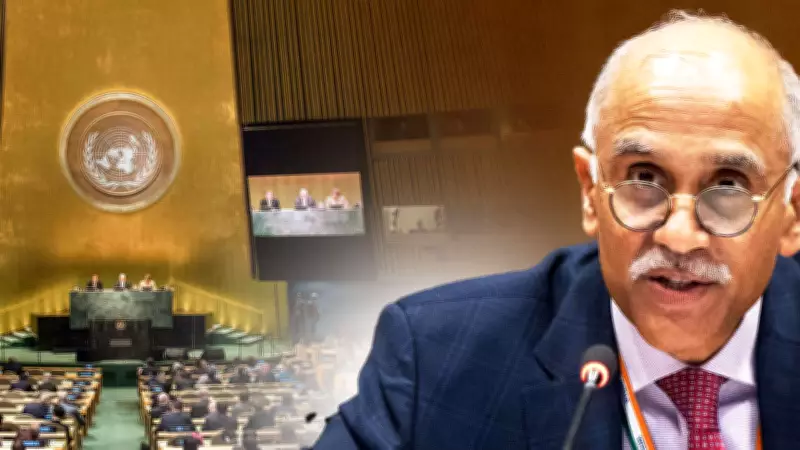
India Calls for Overhaul of UN Security Council, Demands Permanent Seat with Veto Power
In a powerful diplomatic statement at the United Nations, India has forcefully reignited the global debate on international governance reform. The nation has declared the current structure of the United Nations Security Council (UNSC) to be fundamentally outdated and incapable of representing contemporary geopolitical realities.
"No Veto, No Real Reform": India's Core Argument
India's central contention is unequivocal: any reform of the Security Council that does not include the expansion of permanent membership with veto power is essentially meaningless. The country argues that without the equal distribution of this decisive power, there can be no genuine equality of voice among nations on the world's most critical security matters.
"Reform without veto-backed permanent seats is an exercise in futility," the Indian position emphasizes, framing the issue as one of fundamental fairness and procedural justice in global decision-making.

Historical Imbalance and Warning Against Superficial Changes
India provided a critical historical analysis, highlighting how past modifications to the UN system have inadvertently strengthened the dominance of the existing five permanent members (P5) – the United States, Russia, China, France, and the United Kingdom. This, India contends, has only deepened the structural imbalance within the institution.
The nation also issued a clear warning against proposed solutions that involve creating new categories of membership without veto rights. Such measures, India argues, would serve as mere delaying tactics, postponing the substantive and necessary overhaul required to make the UNSC truly representative and effective.
A Push for Legitimacy in a Changing World Order
With the international order undergoing rapid and profound transformation, India asserts that the United Nations must evolve to reflect modern realities rather than remain anchored to an antiquated post-World War II framework. The push for reform is portrayed not merely as a quest for a prestigious seat at the table, but as a broader struggle for fairness, equitable representation, and the restoration of global legitimacy to the premier international security body.
The fundamental question India poses to the international community is stark: Is the world ready to genuinely share power and adapt its institutions, or will it cling to an increasingly anachronistic status quo? As calls for comprehensive UN reform grow louder across the globe, India's forceful advocacy has placed this critical dilemma squarely in the spotlight, challenging other nations to define their stance on the future of multilateral governance.

