

Historian Highlights India's Pivotal Role in UN's Peacemaking History
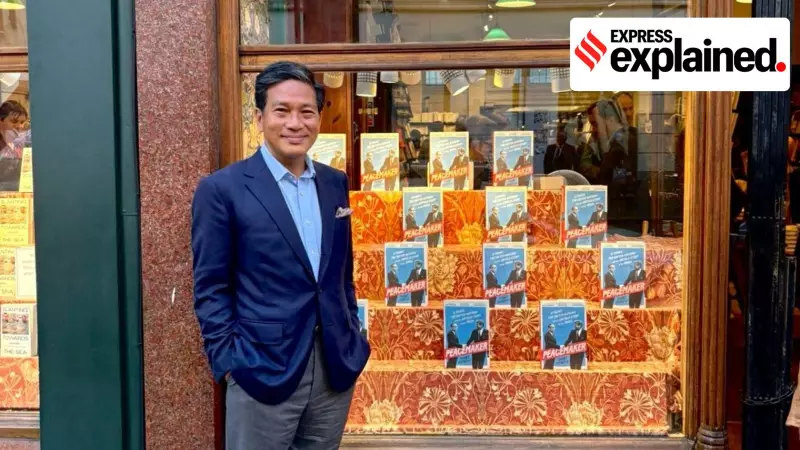
At the Jaipur Literature Festival, historian and writer Thant Myint-U offered a compelling analysis of the United Nations' current challenges. He emphasized India's significant historical contributions to global peace institutions. Myint-U, author of 'Peacemaker' and grandson of former UN Secretary-General U Thant, spoke about the UN's fading credibility and potential paths forward.
The UN's Credibility Crisis and Historical Context
The United Nations faces widespread derision today. Myint-U explained that the organization struggles with relevance amid conflicts like the Russia-Ukraine war and Gaza crisis. He traced this back to its origins in 1945, when America, Russia, and Britain established it to continue their wartime alliance. The Cold War prevented that vision from materializing fully.
Myint-U noted that UN institutions represent an era that never truly happened. However, he highlighted a transformative period in the 1950s and 1960s. Newly independent Asian and African nations, including India and Burma, reshaped the UN into a more effective peace instrument. They strengthened the Secretary-General's role significantly.

Weakening of UN Effectiveness Over Decades
Over the 1970s and 1980s, this progress gradually weakened. Multiple factors contributed, with American actions playing a notable part. The 1990s saw the US as post-Cold War superpower failing to invest adequately in the UN. Today, while the UN performs valuable peripheral work, it remains ineffective on core war and peace issues.
Regarding recent conflicts in Gaza and Ukraine, Myint-U suggested that assessing the UN's potential impact is difficult. These crises interconnect deeply. Once the UN appears weak in one situation, demonstrating relevance in another becomes challenging. This stems from decades of inadequate investment even by supportive nations.
U Thant's Leadership and Historical Moment
Myint-U described his grandfather's approach to the Secretary-General role. U Thant recognized his historical moment profoundly. He understood the Cold War dynamics between Soviets and Americans. More importantly, he grasped the transition from empire to post-empire. He viewed the UN as a tool to consolidate decolonization, then use that legitimacy to de-escalate Cold War tensions and address global issues.
This understanding extended beyond U Thant alone. Many colleagues in New York and governments worldwide shared this perspective. Myint-U lamented that we have forgotten much of what they attempted and achieved.
Recovering Lost Lessons from Non-Aligned Era
Myint-U's book recovers both U Thant and the UN as serious historical actors. Forgetting that moment has cost us valuable insights. He reminded that the past 80 years have seen multiple crisis periods resembling today's situation. In the early 1960s, when U Thant became Secretary-General, solutions to profound crises emerged not from Washington or Moscow.
Answers came from non-aligned countries, Afro-Asian nations, and their partners like Sweden and Ireland. Myint-U stressed that we should not wait for Washington, Moscow, or Beijing today. We must think carefully about preserving peace and security for the next 80 years, preventing another world war.
India's Profound Impact on UN Remaking
India played an essential role in this history. Myint-U described India's contribution to remaking the UN as profound. The organization became not only effective but genuinely helped prevent world war in the 1960s. This involved not just government leadership but an entire generation committed to investing in the UN.
Practical consequences emerged clearly during the Congo crisis. This critical period tested whether post-empire world would allow former colonial powers to intervene arbitrarily or whether independence truly meant independence. Myint-U emphasized that if India had not supplied thousands of its best troops during the 1962 China war, that test might have failed.

India's Role in Today's Geopolitical Landscape
Myint-U characterized the current geopolitical moment as confusing. He identified preventing war between big powers as the first priority. As a major power, India must recognize that global peace requires organization. We must reject the notion that peace comes merely from balance of power or spheres of influence.
After two world wars, people understood that peace required institutions. Myint-U concluded that we must either rescue and recover UN institutions or create something new. This imperative must occupy the forefront of everyone's agenda for global stability and security.
