

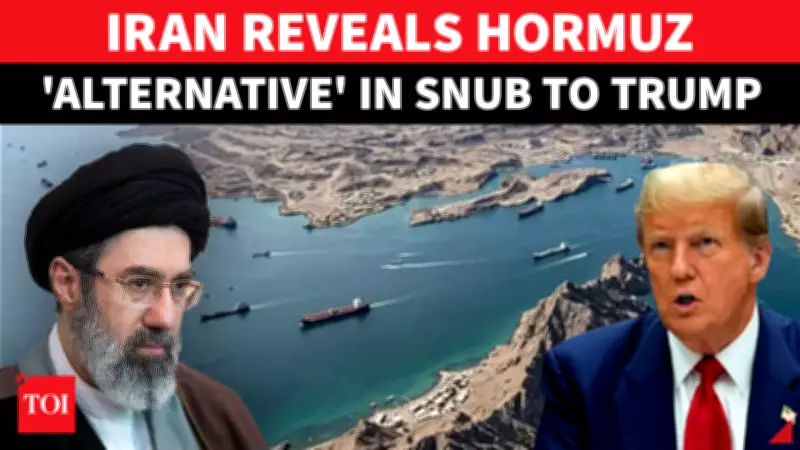
Iran Unveils Land-Based Counter to US Hormuz Blockade Strategy
As the United States Central Command prepared a potential blockade targeting Iranian exports through the critical Strait of Hormuz, Tehran has executed a bold strategic pivot. Rather than confronting the maritime threat directly, Iran has shifted its focus from sea to land, unveiling a comprehensive plan to safeguard its economy and maintain the flow of essential goods.
Mobilizing Border Governors for Cross-Border Commerce
Iranian leadership has mobilized governors along the nation's extensive 8,000-kilometer borders with neighboring countries, including Pakistan, Iraq, and Turkey. This initiative aims to rapidly expand cross-border commerce, creating alternative trade routes that bypass the potential chokehold at sea. Officials have emphasized that rail and road networks have become vital lifelines, ensuring that goods continue to move despite the intensifying geopolitical tensions over global oil routes.
This land-based push demonstrates Iran's determination to leverage its geography as an economic shield, effectively neutralizing the impact of a US-led maritime blockade. By strengthening overland trade, Iran seeks to keep supplies flowing and mitigate disruptions caused by the escalating battle over key oil transit corridors.

Pakistan Opens New Transit Corridor Through Gwadar
In a significant development, Pakistan has opened a new transit corridor that runs through the port of Gwadar, across Iran, and into Central Asia. The first shipment via this route has already reached Tashkent, Uzbekistan, signaling deepening economic ties between Iran and Pakistan. This move represents a regional response to war-era disruptions, highlighting how neighboring countries are adapting to the shifting geopolitical landscape.
The collaboration between Iran and Pakistan underscores a broader trend of regional cooperation in the face of external pressures. By enhancing connectivity through land routes, both nations are working to ensure economic stability and reduce dependency on volatile sea lanes.
Implications for Global Oil Routes and Regional Stability
The intensification of the US-Iran standoff over the Strait of Hormuz has far-reaching implications for global oil markets and regional stability. Iran's strategic shift to land-based trade routes not only counters the immediate threat of a blockade but also reshapes regional economic dynamics. As goods bypass maritime bottlenecks, countries like Pakistan, Iraq, and Turkey gain increased importance as trade partners and transit hubs.
This development comes amid a backdrop of failed diplomatic talks and escalating military posturing, with the US considering limited strikes on Iran and Iran warning of forceful responses. The land-based strategy may provide Iran with a crucial buffer against economic isolation, while also fostering stronger ties with neighboring states.
As the situation evolves, the effectiveness of Iran's Plan B will be closely watched by global observers, with potential impacts on oil prices, regional alliances, and the broader geopolitical balance in the Middle East and Central Asia.

