

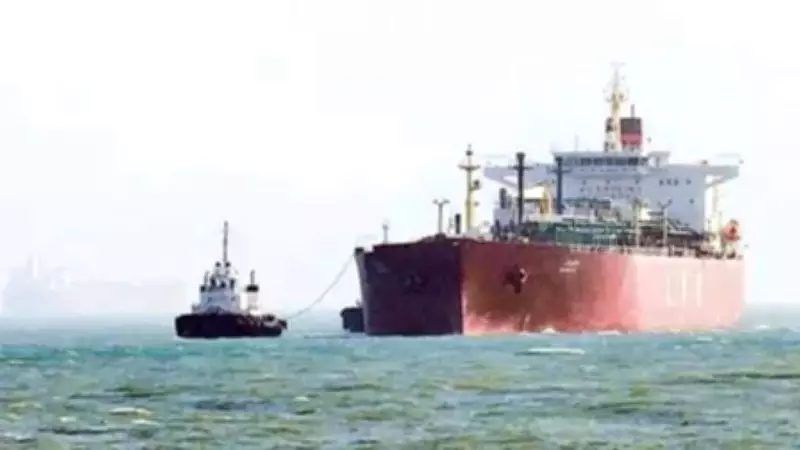
Russia and China Block UN Action on Strait of Hormuz
In a significant diplomatic move, Russia and China exercised their veto power on Tuesday to block a United Nations Security Council resolution that sought to reopen the Strait of Hormuz. This action represents a major setback for Gulf nations, particularly Bahrain, which had spearheaded efforts to restore safe navigation through one of the world's most vital maritime chokepoints for oil transportation.
Resolution Fails Despite Broad Support
The resolution, formally introduced by Bahrain, secured an impressive 11 votes in favor but ultimately failed due to the dual veto from permanent Security Council members Russia and China. Pakistan and Colombia chose to abstain from the vote, which occurred mere hours before a critical deadline set by US President Donald Trump. Trump had demanded that Iran reopen the strategic waterway or face comprehensive attacks on its infrastructure.
"Failing to adopt this resolution sends the wrong signal to the world, to the people of the world," declared Bahrain's Foreign Minister Abdullatif bin Rashid Al Zayani in a post-vote statement. He emphasized that international inaction risks undermining global efforts to protect essential waterways and maintain maritime security.

Diluted Language and Final Provisions
The proposal underwent multiple revisions in an attempt to avoid vetoes from Security Council members. An initial draft contained language authorizing "all necessary means" to ensure safe passage, which could have permitted military intervention. This was subsequently scaled back to "defensive means" and eventually stripped of any explicit Security Council mandate for enforcement action.
In its final iteration, the resolution primarily encouraged countries dependent on the Strait of Hormuz to coordinate defensive measures. These included escorting commercial vessels and implementing deterrents against shipping disruptions. Additionally, the resolution called upon Iran to immediately cease attacks on merchant vessels and halt any interference with navigation through the strait, which typically facilitates approximately one-fifth of the global oil supply.
Russian and Chinese Opposition
Russia and China justified their vetoes by placing blame on the United States and Israel for escalating regional tensions. Their diplomatic envoys argued that the international community should prioritize an immediate cessation of hostilities rather than focusing exclusively on maritime security measures. This position reflects broader geopolitical alignments and strategic interests in the Middle East.
Global Energy Markets and Regional Tensions
The ongoing blockade of the Strait of Hormuz by Iran continues to destabilize global energy markets and heighten concerns among Gulf nations, many of which rely heavily on this route for oil and gas exports. Bahrain, which hosts the US Fifth Fleet, has been advocating for international intervention, characterizing the disruption as an existential threat to regional stability and economic security.
Tensions have escalated further with repeated warnings from President Trump, who has insisted that Iran reopen the waterway. Trump cautioned that non-compliance could trigger a large-scale military response, stating that the country could be "taken out in one night" if a diplomatic agreement is not reached promptly.
The Security Council standoff underscores the complex interplay of global powers in Middle Eastern affairs and highlights the challenges of achieving consensus on critical international security issues. The veto has left Gulf nations exploring alternative diplomatic and strategic options to address the ongoing maritime crisis.

