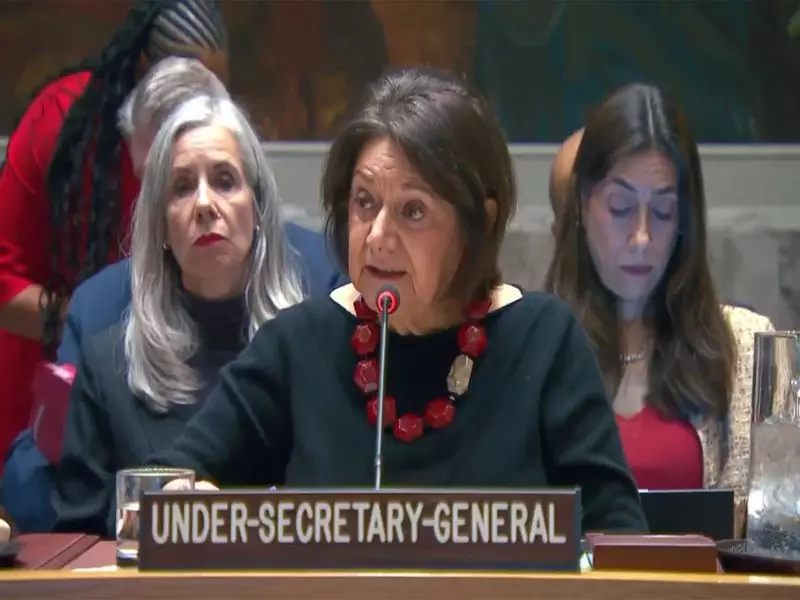
The United Nations has issued a stark warning following a recent military action by the United States in Venezuela, expressing profound apprehension about the potential for escalating instability in the South American nation. The statement, delivered by a top UN official, underscores the international body's growing unease over the situation.
UN Official Raises Alarm Over Escalating Tensions
Rosemary DiCarlo, the UN Under-Secretary-General for Political and Peacebuilding Affairs, voiced the organization's position clearly. DiCarlo stated she is "deeply concerned about the possible intensification of instability" within Venezuela in the wake of the US operation. This direct commentary from a high-ranking UN diplomat highlights the gravity with which the world body views the incident and its potential ripple effects on regional security and the Venezuelan population.
The context of this strike is critical. It occurred against the backdrop of Venezuela's prolonged political and economic crisis, with President Nicolas Maduro's government facing intense pressure from the US and other nations. The US has consistently labeled Maduro's administration as illegitimate, imposing severe sanctions and recognizing opposition figures. This military action, therefore, is seen not as an isolated event but as a significant escalation within a complex geopolitical standoff.

Details and Implications of the US Military Action
While the exact operational details of the strike were not fully elaborated in the UN's public remarks, the core fact remains: a US military intervention took place on Venezuelan soil. Such actions are exceedingly rare and represent a dramatic shift in tactics. Historically, pressure on Caracas has been primarily economic and diplomatic. The move to a kinetic military option, even if limited, signals a dangerous new phase that has immediately drawn international scrutiny and concern.
The UN's primary worry, as articulated by DiCarlo, is the "possible intensification of instability." Venezuela is already grappling with hyperinflation, severe shortages of basic goods, and a massive refugee exodus. An escalation of conflict could exacerbate all these humanitarian issues, leading to greater suffering for civilians and further destabilizing neighboring countries that host Venezuelan refugees.
Broader Regional and Global Repercussions
The reaction from the United Nations places this bilateral confrontation into a global security framework. The UN's role as a guardian of international peace and security means its concerns carry significant weight. By publicly stating its deep concern, the organization is effectively calling for restraint and a return to dialogue, implicitly cautioning against unilateral actions that could spiral out of control.
This development also has implications for the global order. It tests the principles of national sovereignty and the permissible limits of foreign intervention. Other nations, particularly those in Latin America and the Caribbean, are likely watching closely, assessing the precedent being set. The situation demands careful diplomacy to prevent a full-blown crisis that would have consequences far beyond Venezuela's borders.
In conclusion, the statement from UN Under-Secretary-General Rosemary DiCarlo serves as a critical international checkpoint. It marks the moment a US military strike in Venezuela transitioned from a bilateral incident to a matter of urgent global security concern. The call is now for de-escalation, as the alternative—a deeper plunge into instability—poses a threat that the United Nations is determined to highlight and help avert.