

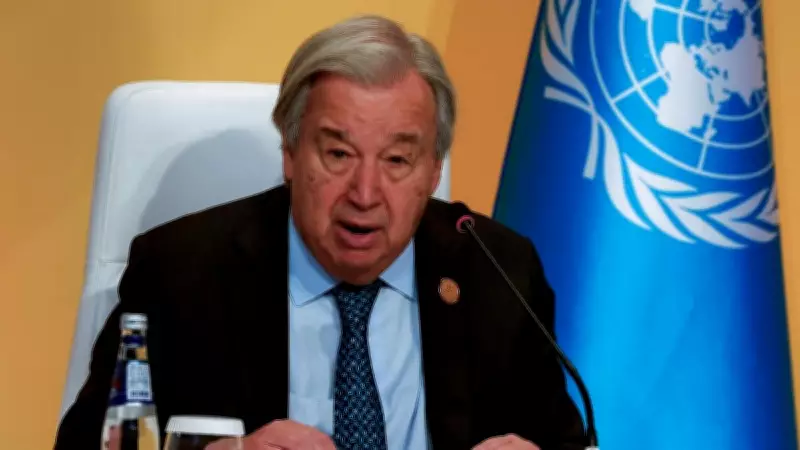
United Nations Secretary-General Antonio Guterres has pointed to the trade agreement between India and the European Union as a significant example in his call for strengthening global multi-polarity. In his remarks, Guterres stressed that international structures and institutions must evolve to better reflect the complexity and opportunities of what he termed "new times and realities."
Emphasizing the Need for Evolving Global Frameworks
Guterres underscored the urgency for global governance mechanisms to adapt to the shifting dynamics of the contemporary world. He argued that outdated systems are inadequate for addressing modern challenges and harnessing emerging opportunities. The UN chief's comments highlight a broader push for reforms in international organizations to ensure they are more inclusive, representative, and effective.
India-EU Trade Agreement as a Case Study
The reference to the India-EU trade pact serves as a concrete illustration of how bilateral and regional agreements can contribute to a more balanced and multi-polar global order. This agreement, which facilitates economic cooperation and trade between two major geopolitical entities, exemplifies the kind of partnerships that can foster stability and growth in an increasingly interconnected world.

Guterres' emphasis on this specific deal suggests that such collaborations are not merely economic transactions but are pivotal in shaping a more equitable international landscape. By highlighting India's role, he acknowledges the country's growing influence on the global stage and its potential to drive positive change through strategic alliances.
Broader Implications for International Relations
The call for multi-polarity resonates with ongoing debates about the need to move away from unipolar or bipolar dominance in global affairs. Guterres' stance advocates for a world where multiple centers of power and influence coexist, promoting diversity in perspectives and solutions. This approach is seen as essential for addressing complex issues such as climate change, economic inequality, and geopolitical tensions.
As global institutions face scrutiny over their relevance and effectiveness, Guterres' remarks add momentum to efforts aimed at reforming bodies like the United Nations itself. The focus on adapting to "new realities" implies a recognition that the post-World War II order may require significant adjustments to remain viable in the 21st century.
In summary, Antonio Guterres has leveraged the India-EU trade agreement to reinforce his argument for a multi-polar world. His comments serve as a reminder that international cooperation, through agreements like this one, is crucial for building a more resilient and fair global system that can navigate the challenges of today and tomorrow.

