

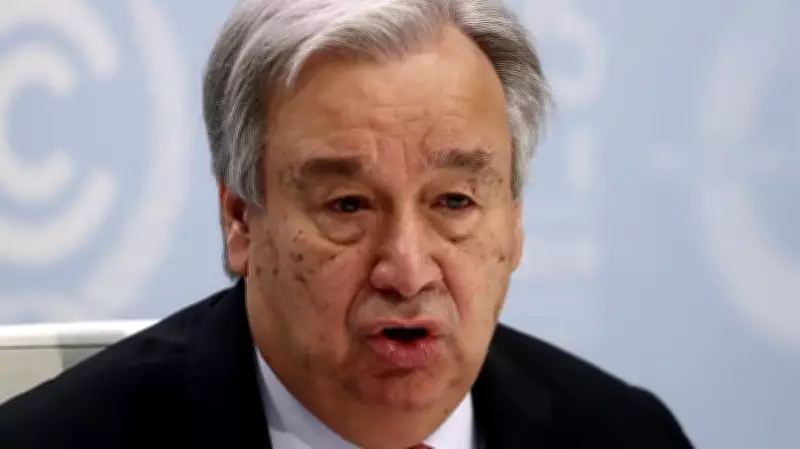
UN Chief Antonio Guterres Calls for Recognition of Security Council's Structural Problem
United Nations Secretary-General Antonio Guterres has issued a stark critique of the current composition of the UN Security Council, emphasizing a significant geographic imbalance that he says must be acknowledged as a fundamental problem. Speaking on the issue, Guterres pointed directly to the distribution of permanent members within the 15-nation body.
A Stark Imbalance in Permanent Membership
The UN chief detailed that three of the five permanent members are from Europe, one is from Asia, and one is the United States. This configuration, he argued, leaves entire continents without a permanent voice at the highest table of global security decision-making. "We need to recognise we have a problem with the Security Council," Guterres stated, underscoring the urgency of addressing this disparity.
His remarks highlight a long-standing criticism of the UNSC's structure, which has remained largely unchanged since its inception in 1945. The absence of permanent members from Africa and Latin America is seen as a critical flaw, especially as these regions face complex security challenges that require sustained representation and influence.

The Impact of Underrepresentation
The current setup means that key decisions on international peace and security are made without the guaranteed input of nations from two major world regions. This can lead to policies that may not fully consider the perspectives or needs of African and Latin American countries. Guterres's comments come amid ongoing debates about UN reform, with many member states advocating for a more inclusive and representative Security Council.
Analysts note that this imbalance affects not only diplomatic relations but also the legitimacy and effectiveness of UN resolutions. By calling for recognition of the problem, Guterres is pushing for a broader conversation on how to modernize the Council to reflect 21st-century geopolitical realities.
Looking Ahead: Calls for Reform
While Guterres did not propose specific solutions in his statement, his emphasis on acknowledging the issue is a significant step. Reform discussions often face political hurdles, but his leadership could galvanize efforts to explore options such as:
- Expanding the number of permanent members to include African and Latin American nations.
- Enhancing the role of non-permanent members from these regions.
- Implementing procedural changes to ensure more equitable participation.
The UN chief's remarks, made on March 15, 2026, resonate with a growing global consensus that international institutions must evolve to address contemporary challenges. As the world grapples with conflicts, climate change, and economic disparities, a more balanced Security Council could be crucial for fostering cooperation and stability.
In conclusion, Antonio Guterres has put a spotlight on a critical issue within the United Nations framework. By highlighting the lack of permanent African and Latin American representation, he urges the international community to confront and rectify this structural problem, paving the way for a more just and effective global governance system.

