

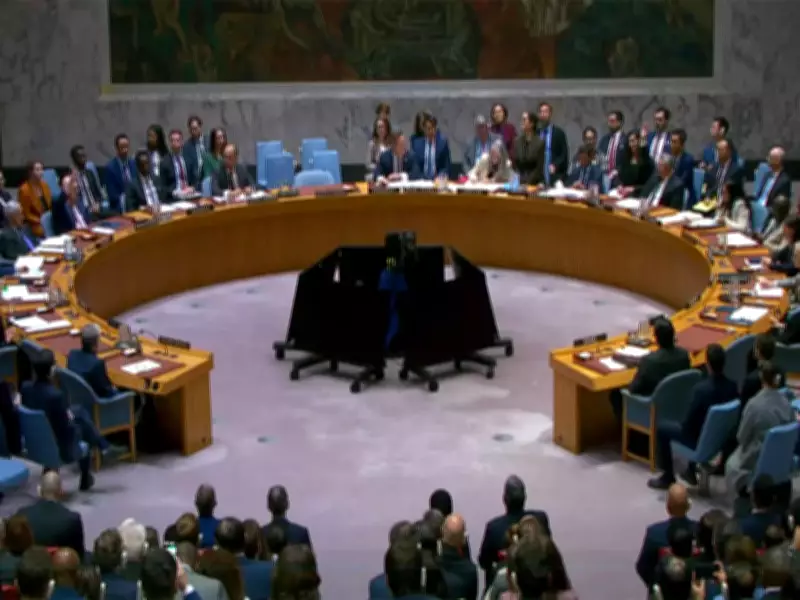
UN Security Council Passes Resolution Condemning Iran's Military Actions
In a significant diplomatic development, the United Nations Security Council has adopted a resolution strongly condemning Iran's recent attacks on multiple Middle Eastern nations. The resolution, numbered 2817 (2026), received overwhelming support from the international community, with India joining nearly 140 member states in backing the measure.
Voting Results and Key Provisions
The 15-member council passed the resolution with 13 votes in favor, while two permanent members, China and Russia, chose to abstain from the vote. The document specifically condemns Iran's military strikes against seven nations: Bahrain, Kuwait, Oman, Qatar, Saudi Arabia, the United Arab Emirates, and Jordan.
The resolution contains several critical demands:

- Immediate cessation of attacks on residential areas and civilian infrastructure
- Halting of threats, provocations, and actions that interfere with maritime trade routes
- Ending support for proxy groups operating in the region
International Reactions and Diplomatic Fallout
Iran's representative at the United Nations strongly rejected the adopted resolution, characterizing it as "a manifest injustice against my country" and warning that it represents "a serious setback to the Council's credibility." This response underscores the deepening diplomatic tensions surrounding Iran's military activities in the region.
In contrast, Bahrain's representative welcomed the Security Council's action, stating that "the message is clear" and emphasizing that "the international community is resolute in rejecting these Iranian unjust, hostile acts." Israel also expressed support for the condemnation, asserting that "targeting civilians is wrong, targeting cities is wrong, and Iran must stop."
Alternative Resolution Rejected
Following the main vote, the Security Council considered and rejected a separate draft resolution proposed by Russia. This alternative measure called for general de-escalation in the region without specifically naming any country. The Russian-backed resolution received only four votes in favor, failing to gain sufficient support for adoption.
China, which abstained from the main resolution, explained its position by stating that the document "does not fully reflect the root cause and overall picture of the conflict in a balanced manner." This perspective highlights the continuing diplomatic divisions within the Security Council regarding approaches to Middle Eastern conflicts.
The resolution comes amid ongoing military strikes in the region following joint operations by the United States and Israel in Tehran. Recent developments include Saudi Arabia intercepting a drone headed toward the Shaybah oil field and Israeli forces striking ten Hezbollah targets in Beirut. Iran has also issued warnings to major US technology companies including Google, Amazon, Microsoft, and Nvidia, while setting three conditions for potential talks with the United States as hostilities continue.

