

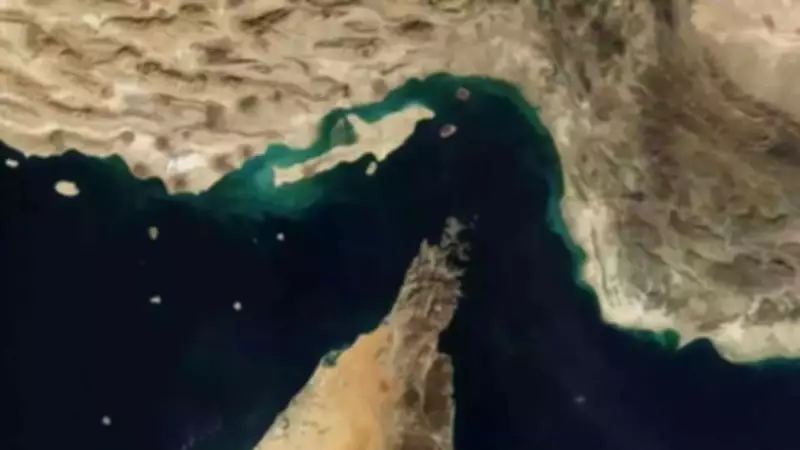
United Nations Issues Stark Warning on Global Trade Risks from Strait of Hormuz Closure
The United Nations issued a sobering warning on Tuesday about "significant risks" to global trade and development if the Strait of Hormuz remains closed amid escalating Middle East tensions. According to a comprehensive report from the UN Conference on Trade and Development (UNCTAD), the military escalation following US-Israeli strikes on Iran and Tehran's retaliatory attacks has already severely disrupted shipping through this critical maritime chokepoint.
Far-Reaching Economic Consequences Beyond the Region
The ripple effects extend far beyond the immediate conflict zone, potentially impacting energy markets, maritime transport systems, and global supply chains. The UN report specifically highlighted that higher energy, fertilizer, and transport costs—including increased freight rates, bunker fuel prices, and insurance premiums—could substantially increase food costs and intensify cost-of-living pressures worldwide.
"The resulting ripple effects go far beyond the region, affecting energy markets, maritime transport and global supply chains," the UNCTAD report stated. "Higher energy, fertilizer and transport costs may increase food costs and intensify cost-of-living pressures, particularly for the most vulnerable populations globally."

Vulnerability of Critical Maritime Chokepoints
UNCTAD emphasized that the current situation underscores how geopolitical tensions can exploit vulnerabilities in key maritime chokepoints, with potential to transmit economic shocks across global supply chains and commodity markets. The economic impact of a prolonged blockade would depend on several critical factors:
- Duration of the closure
- Intensity of military operations
- Geographic scope of the conflict
"Economic impacts, both globally and for the region, will depend on the duration, intensity, and geographic scope of the tensions," the report added. "Continued monitoring is essential to assess evolving risks and their potential impacts on the global economy."
Developing Nations Face Particular Vulnerability
According to UNCTAD analysis, many developing countries already confront substantial economic challenges including high debt burdens, limited fiscal space, and constrained access to international finance. Rising energy, transport, and food costs could further strain public finances and household budgets in these nations, heightening economic and social pressures while complicating progress toward sustainable development goals.
This is particularly concerning for countries heavily dependent on imported energy, fertilizers, and staple foods. The report specifically warned: "When oil prices go up, food prices often go up. When gas prices go up, fertilizer prices often go up," highlighting the interconnected nature of global commodity markets and the far-reaching consequences of a potential prolonged closure.
Strategic Importance of the Strait of Hormuz
The narrow passage between the Persian Gulf and Gulf of Oman handles approximately one-quarter of global seaborne oil trade, along with significant volumes of liquefied natural gas (LNG) and fertilizers. According to UNCTAD data:
- Around 20 million barrels of oil per day passed through the Strait in 2024
- This includes 14 million barrels of crude and condensate plus 6 million barrels of petroleum products
- The Strait carries 38% of global seaborne crude oil trade
- It transports 29% of global LPG (liquefied petroleum gas)
- 19% each of global LNG and refined products move through this waterway
Dramatic Reduction in Shipping Traffic
Since February 28, when the US and Israel launched initial strikes on Iran, ship traffic through Hormuz has dropped by a staggering 97%, raising serious concerns about energy supplies—particularly to Asian markets. In 2024, 84% of crude oil transported through the Strait was destined for Asia, and 83% of LNG shipments were headed to the same region.

Additionally, approximately one-third of global fertilizer trade—roughly 16 million tonnes annually—also passes through this strategic waterway. Iran has vowed to block the Strait "for as long as the war continues," creating uncertainty about when normal shipping might resume.
The UN warning comes as the Middle East conflict enters its twelfth day, with continued military actions and no immediate ceasefire in sight. The situation represents one of the most significant threats to global trade stability in recent years, with potential consequences that could affect economies and populations worldwide for months or even years to come.
