

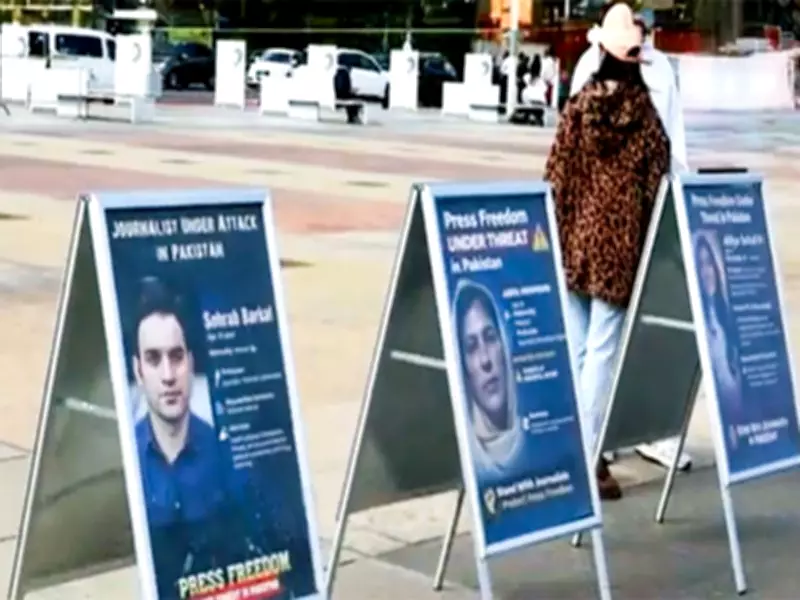
UNHRC Photo Exhibition Spotlights Deteriorating Press Freedom in Pakistan
On the sidelines of the 61st session of the United Nations Human Rights Council (UNHRC), a compelling photo exhibition was staged near the iconic Broken Chair Monument outside the United Nations office in Geneva, Switzerland. This event, organized by the ECO-FAWN Society, aimed to draw international attention to what participants describe as a worsening environment for journalists in Pakistan, highlighting alleged curbs on press freedom that have sparked global concern.
Exhibition Details and Key Messages
The exhibition featured a series of striking posters with powerful messages such as "Journalists under attack in Pakistan" and "Press freedom under threat in Pakistan." Set against the backdrop of ongoing human rights discussions in Geneva, the display strategically targeted diplomats, activists, and global observers gathered in the area. By amplifying concerns about the state of media freedom, the organizers sought to engage a diverse audience and foster dialogue on this critical issue.
Included in the exhibition were detailed profiles of several journalists, outlining claims of harassment, detention, intimidation, and increasing restrictions on reporting. Organizers alleged that these pressures have created a challenging and often unsafe working environment for media professionals in Pakistan. This situation raises serious questions about the country's commitment to democratic principles, as a free and independent press is widely regarded as a cornerstone of any democratic society.

Organizers' Calls to Action and International Response
Through this campaign, the ECO-FAWN Society called on the international community to take note of the deteriorating press freedom in Pakistan and advocate for stronger protections for journalists. They emphasized that continued suppression could undermine transparency and accountability, warning of long-term consequences for democratic governance. The choice of location, just steps away from the United Nations, was seen as a deliberate effort to bring these concerns directly to the global stage, ensuring the issue resonates beyond national borders.
By positioning the protest in such a prominent international setting, organizers aimed to attract the attention of policymakers and human rights bodies. While press freedom in Pakistan remains a subject of ongoing debate, the demonstration in Geneva sent a clear message about growing unease among activists and observers worldwide. This event underscores the importance of international solidarity in addressing human rights challenges and protecting fundamental freedoms.

