

Pakistan's Human Rights Record Under Intense Scrutiny at UN Council Session
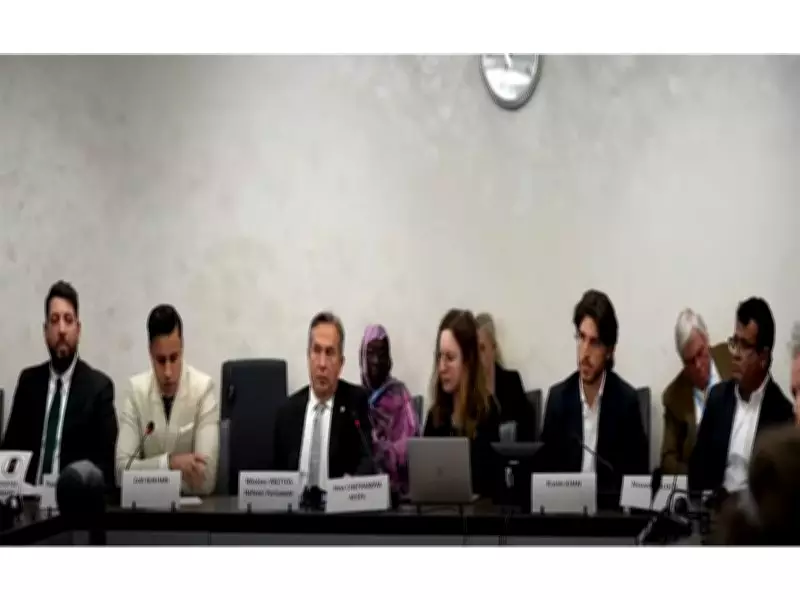
Pakistan's human rights situation faced rigorous examination during a significant side event at the 61st session of the United Nations Human Rights Council (UNHRC) in Geneva, Switzerland. Multiple speakers presented detailed accounts of political repression, enforced disappearances, and alleged violations of international obligations, directly linking these issues to Pakistan's preferential trade status with the European Union.
Allegations of Systematic Political Crackdown
Zulfi Bukhari, a former minister associated with the Pakistan Tehreek-e-Insaf (PTI) party, delivered a powerful testimony alleging a systematic government crackdown following the arrest of former Prime Minister Imran Khan in 2023. Bukhari claimed that thousands of PTI party workers have been arbitrarily detained, political freedoms have been severely curtailed, and civilians have been subjected to trials in military courts, which he described as fundamentally unfair.
He further detailed the deteriorating health conditions of Imran Khan, who has reportedly spent over two and a half years in prison with severely restricted access to legal representation and family visits. Despite these serious allegations, Bukhari made a nuanced argument that Pakistan should retain its Generalized Scheme of Preferences Plus (GSP+) status granted by the European Union. He described this trade framework as a crucial mechanism for maintaining Pakistan's economic stability while simultaneously serving as a potential tool for enforcing international accountability.

Family Testimony and Election Credibility Concerns
Kasim Khan, son of the imprisoned former prime minister, provided emotional testimony describing his father's detention as "arbitrary" and detailing harsh conditions including solitary confinement with severely restricted communication. He alleged systematic denial of adequate medical care and family visitation rights, characterizing these actions as part of a broader pattern of political repression that has intensified since 2022.
Kasim Khan also raised serious questions about the credibility of Pakistan's 2024 general elections, claiming they were systematically manipulated to sideline his father's political party and suppress democratic opposition voices. His testimony painted a picture of a political landscape where fundamental democratic processes have been compromised.
Broader Human Rights Violations in Balochistan
Naseem Baloch, Chairman of the Baloch National Movement, provided critical context about longstanding human rights violations in Pakistan's Balochistan province. He presented documented cases of enforced disappearances, extrajudicial killings, and systematic torture, alleging that thousands of activists and civilians have been affected over multiple decades.
According to Baloch, these practices represent a systemic human rights crisis that transcends individual political regimes and administrations. He emphasized that Pakistan's continued access to the GSP+ trade framework raises serious questions about the enforcement of human rights conditionality that accompanies such preferential trade agreements.
Calls for International Accountability
Multiple speakers at the UNHRC side event urged the European Union to conduct a comprehensive and transparent review of Pakistan's compliance with international human rights treaties, including:
- The International Covenant on Civil and Political Rights
- The Convention Against Torture and Other Cruel, Inhuman or Degrading Treatment or Punishment
- Other relevant international human rights instruments
The testimonies collectively highlighted what speakers described as a growing disconnect between Pakistan's international trade privileges and its domestic human rights practices. The event served as a platform for demanding stronger international oversight mechanisms to ensure that trade benefits are genuinely linked to measurable improvements in human rights protection.

The discussions at the 61st UNHRC session have placed renewed international attention on Pakistan's human rights record, with particular focus on the intersection between trade policy and human rights accountability. The testimonies presented suggest that without meaningful reforms and greater transparency, Pakistan's international standing and trade relationships may face increasing scrutiny in global forums.
