The year 2026 has commenced at a frenetic pace, marked by significant geopolitical shifts and deepening domestic economic unease within the United States. This volatile climate is setting the stage for a crucial political reckoning as the nation approaches its midterm elections in November.
A World in Turmoil: Trump's Interventionist Start to 2026
President Donald Trump's second term has begun with dramatic and unilateral actions on the global stage. The US administration has taken control of Venezuela, a sovereign nation, signaling a highly interventionist foreign policy. Furthermore, Trump has openly threatened to annex Greenland, a territory belonging to the longstanding ally Denmark.
Simultaneously, international hotspots are simmering. Civil unrest in Iran presents a potential pretext for further US intervention. The conflict between Ukraine and Russia continues, while China appears emboldened to potentially act on its long-held claim over Taiwan. The global order seems increasingly unstable under this assertive American posture.

Domestic Crackdowns and Economic Alarm Bells
Within US borders, the situation is equally tense. A crackdown on immigrants turned fatal when an unarmed US citizen was killed by an ICE agent in Minneapolis. On the economic front, job growth has stalled, raising concerns about the health of the world's largest economy.
Perhaps most alarmingly for global financial markets, the US Department of Justice has initiated a criminal investigation against the Chairman of the Federal Reserve. This unprecedented move is widely perceived as a direct threat to the independence of the central bank, a cornerstone of global economic stability.
The 2026 Midterms: A Potential Check on Presidential Power
For those questioning the direction of Trump's policies, the constitutional remedy lies in the ballot box. All 435 seats in the House of Representatives and one-third of the Senate will be contested on November 3, 2026. Currently, Trump's Republican Party controls both chambers of Congress.
However, if voter discontent over foreign adventures and economic hardship translates into a Democratic victory, President Trump could be rendered a "lame duck," struggling to pass legislation and potentially facing renewed impeachment threats. The political winds may be shifting, as evidenced by key Democratic victories in late 2025.
Notably, Zohran Mamdani, a democratic socialist, was elected Mayor of New York. In his victory speech, he championed collectivism over "rugged individualism" and vowed to govern on his principles. Similar wins by Democrats Abigail Spanberger in Virginia and Mikie Sherrill in New Jersey, all campaigning on affordability, suggest a brewing counter-movement.
"Fight Oligarchy": Bernie Sanders' Blueprint for a Radical Shift
This emerging political alternative finds intellectual grounding in a late-2025 book by Senator Bernie Sanders, titled "Fight Oligarchy." The book, recommended by Mayor Mamdani, outlines a movement to elect leaders who can dismantle the concentration of wealth and power in America.
Sanders defines oligarchy as a system where a tiny, ultra-wealthy elite controls a nation's economy, politics, and media, leaving ordinary citizens powerless. He presents staggering data to illustrate the problem:
- Elon Musk's wealth surpasses that of the bottom 52% of American households.
- The top 1% own more than the bottom 93%.
- Corporate CEOs earn 350 times more than their average employee.
The concentration extends beyond income. Sanders notes that just four firms control 80% of beef processing and 70% of pork processing in the US. Most critically, he highlights the stranglehold of three Wall Street giants—Vanguard, BlackRock, and State Street—which are the largest shareholders in 95% of S&P 500 companies.
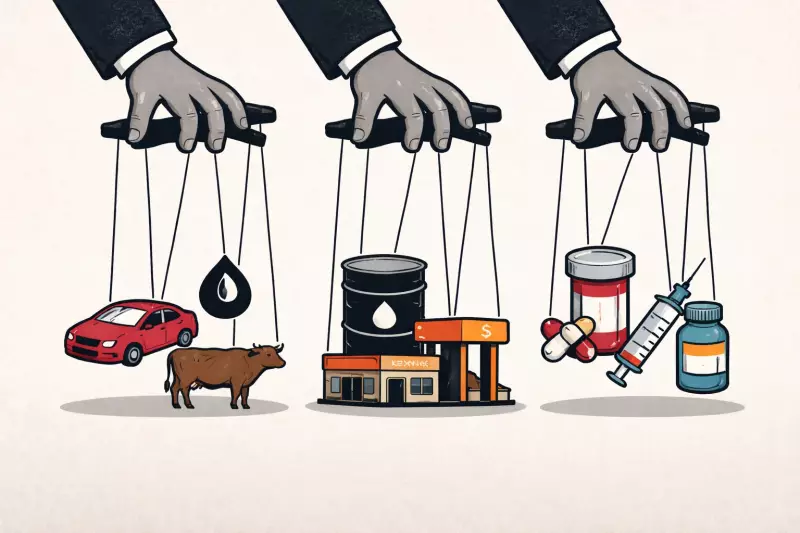
This leads to a lack of true competition. The same three firms are the top shareholders in rival automakers GM and Ford, in oil giants ExxonMobil and Chevron, and in pharmaceutical leaders Pfizer, Merck, and Johnson & Johnson.

In a compelling chapter, "Some Lessons from History," Sanders argues that ideas once deemed radical—like abolishing slavery, establishing an eight-hour workday, or granting women's suffrage—eventually became norms. He positions the fight against oligarchy as the next necessary, radical step.
The Road to 2028: AOC and the Future of US Politics
Sanders' book is more than a critique; it is a potential playbook for the next phase of American politics. Although she has not declared candidacy, speculation is rife that Congresswoman Alexandria Ocasio-Cortez (AOC) could run for President in 2028. For her supporters, an AOC presidency would symbolize America's shift toward a democracy prioritizing widespread economic well-being over oligarchic power.
As 2026 unfolds, the United States stands at a crossroads. The interventionist policies of the Trump administration are creating global ripples and domestic dissent. Meanwhile, a coherent ideological alternative, crystallized in Sanders' "Fight Oligarchy," is gaining traction. The outcome of the November midterms will be a decisive indicator of which path the American electorate chooses, with profound implications not just for the US, but for the world, including nations like India that often look to America's economic model.