For years, the seamless global movement of talent was an unseen pillar supporting America's technology sector. Engineers would briefly travel abroad for visa renewals and return to their US offices with minimal disruption. That entire system is now cracking, and a recent internal policy from Amazon reveals just how precarious the situation has become.
A Tightly Bound Exception, Not Flexibility
According to an internal company memo reviewed by Business Insider, Amazon has granted a special exception for employees stranded in India due to significant US visa delays. These employees are permitted to continue working remotely, but this arrangement is strictly limited and lasts only until March 2, 2026.
This is not a blanket policy of trust, but a legally cautious maneuver. It applies solely to staff who were already physically present in India as of December 13 and whose visa appointments were officially rescheduled by US consulates. More critically, the scope of work they can perform is drastically reduced.

The memo explicitly prohibits core technical and decision-making functions. Employees cannot code, test software, troubleshoot systems, or make strategic decisions. They are also barred from customer interactions, contract negotiations, and even entering Amazon offices in India.
"All reviews, final decision-making, and sign-offs should be undertaken outside India," the directive states, emphasizing there are "no exceptions" to comply with local laws. The outcome is a professional limbo: workers remain on the payroll but are severed from the essential duties that define their roles.
The Root Cause: A Shifting US Visa Landscape
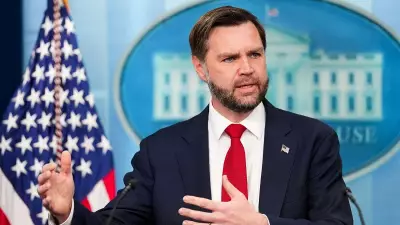
Amazon's decision is a direct response to sweeping changes in the US H-1B visa process. Under the Trump administration, new directives have been implemented, including one that requires consular officers to scrutinize applicants' social media histories before granting approvals.
A US State Department spokesperson told Business Insider the goal is to use "all available tools" to identify applicants who may be inadmissible or pose security risks. The practical impact has been immediate and severe: visa processing has slowed to a crawl, with appointments being postponed by months or even years.
Some US embassies and consulates have reportedly rescheduled interviews as far out as 2027. This has transformed a routine administrative step into a prolonged standstill. In response, other tech giants like Google, Apple, and Microsoft have advised employees on visas to avoid international travel entirely, fearing they may not be able to re-enter the United States.
Operational Coherence Begins to Fray
Amazon's temporary extension far exceeds its standard policy, which typically allows for only 20 business days of remote work during visa renewal travel. Pushing this deadline to 2026 underscores the scale of disruption the company anticipates.
However, the severe restrictions prompt a difficult question: what meaningful work can these employees actually do? For technical staff like software engineers, the answer is very little. One Amazon engineer revealed that 70 to 80 percent of their job involves the very tasks now forbidden—coding, testing, deploying, and documenting software.
The memo also fails to address employees whose visa appointments are scheduled beyond the March 2026 cutoff or those stranded in countries other than India, leaving them in uncertainty.
This episode highlights a critical vulnerability. Amazon is one of the largest users of the H-1B visa system. Business Insider's analysis of US Department of Labor data shows that in the 2024 federal fiscal year, Amazon filed 14,783 certified H-1B applications, including those for its subsidiary Whole Foods. This massive dependency, once a growth engine, now magnifies the company's exposure when immigration policy suddenly tightens.
The effects ripple through product development timelines, team dynamics, and internal planning. While legal compliance is maintained, operational efficiency and momentum are lost.

More Than a Pause: A Warning for the Tech Industry
Amazon's memo functions less as a solution and more as a pause button—an attempt to retain talent while waiting for a broken system to correct itself. It signals a new reality for US tech: global mobility can no longer be assumed, and work does not seamlessly continue when borders become barriers.
For the Indian professionals caught in this bind, the uncertainty is profound—affecting their careers, finances, and personal lives. For the wider industry, Amazon's constrained compromise is a stark warning. When visa clocks stop, the cost is measured not just in delays, but in a tangible loss of momentum and human potential.