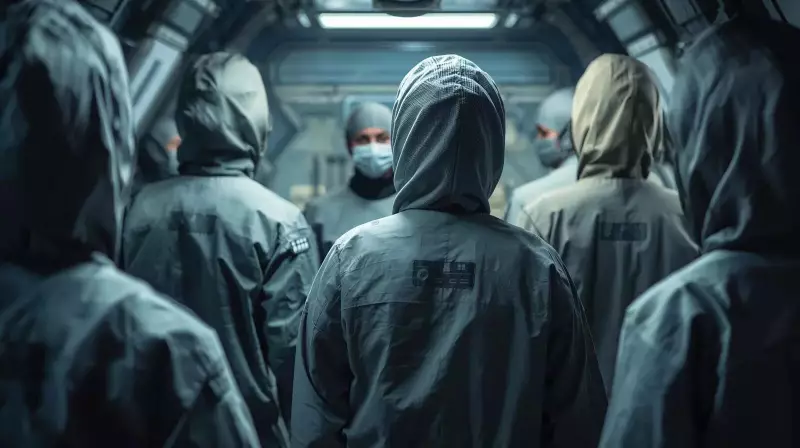
NASA's Artemis II Crew Enters Controlled Quarantine Phase in Houston
The four astronauts selected for NASA's groundbreaking Artemis II mission have now transitioned into a crucial period of controlled isolation, marking a significant milestone in the lead-up to humanity's return to lunar exploration. This carefully managed quarantine phase, which commenced late Friday in Houston, represents a standard yet vital protocol designed to safeguard crew health and ensure mission readiness as launch preparations advance without a definitive calendar date.
Health Stabilization Protocol for Lunar Mission Crew
Commanded by Reid Wiseman alongside crew members Victor Glover, Christina Koch, and Canadian astronaut Jeremy Hansen, the Artemis II team has initiated NASA's comprehensive health stabilization program. While traditionally beginning approximately two weeks before launch, this adaptable quarantine framework has been strategically implemented earlier to maintain scheduling flexibility amid ongoing testing of the Space Launch System rocket and Orion spacecraft.
This innovative approach to crew health management significantly limits public interactions while reducing potential infection risks that could otherwise delay the historic mission. NASA officials emphasize that this process constitutes health stabilization rather than absolute isolation, permitting controlled interactions with family members, colleagues, and friends who adhere to identical protective guidelines.

Daily protocols now incorporate mandatory mask usage, physical distancing measures, and carefully regulated environments throughout the quarantine duration. The program's inherent flexibility enables NASA to respond dynamically to potential launch date adjustments, allowing crew members to temporarily exit and re-enter quarantine periods as mission timelines evolve—a proven strategy successfully employed during previous space missions to manage testing uncertainties.
Continued Training Amid Restricted Movement
Despite movement limitations, the Artemis II astronauts maintain rigorous preparation schedules throughout their quarantine period. Mission simulations, comprehensive medical evaluations, and final operational reviews proceed uninterrupted, ensuring crew proficiency remains at peak levels while minimizing unnecessary external exposure risks.
Training modules concentrate intensively on spacecraft operational procedures, emergency response protocols, and inter-crew coordination mechanisms. Most activities occur within controlled facility environments or through advanced remote systems that effectively limit external contact, creating a methodical rather than intensive preparatory phase that prioritizes both safety and skill retention.
Strategic Transition from Houston to Florida
The Artemis II crew will predominantly remain stationed in Houston throughout the quarantine period, with plans to transfer to NASA's Kennedy Space Center in Florida approximately six days before the anticipated launch window. At Kennedy, astronauts will occupy the historic crew quarters within the Neil A. Armstrong Operations and Checkout Building—a traditional final preparation site offering controlled access and proximity to Launch Pad 39B.
Concurrently, engineering teams continue advancing Space Launch System and Orion spacecraft preparations at the Florida launch complex. Recent accomplishments include comprehensive checkouts of mechanical power systems, engine components, and cryogenic propellant lines, with launchpad clearance operations underway to facilitate booster servicing activities. These systematic preparations represent standard protocol rather than definitive launch scheduling indicators, with additional testing required to determine subsequent mission milestones.
Global Recovery Preparations and Mission Objectives
Beyond launch site activities, specialized recovery teams comprising NASA and Department of Defense personnel are conducting final maritime preparations for post-mission crew retrieval. Extensive sea-based simulations currently underway focus on timing precision, operational coordination, and safety protocols for Orion spacecraft splashdown scenarios, with recovery assets positioned to mobilize only after successful launch confirmation.

Artemis II represents the inaugural crewed mission within NASA's ambitious Artemis program, scheduled for approximately ten days of lunar orbital operations without surface landing. This foundational mission prioritizes comprehensive system validation over record-setting achievements, with gathered operational data directly informing subsequent Artemis missions including future lunar landings. Current progress reflects deliberate, measured advancement characterized by flexible timelines and meticulous preparatory activities unfolding across multiple global locations.