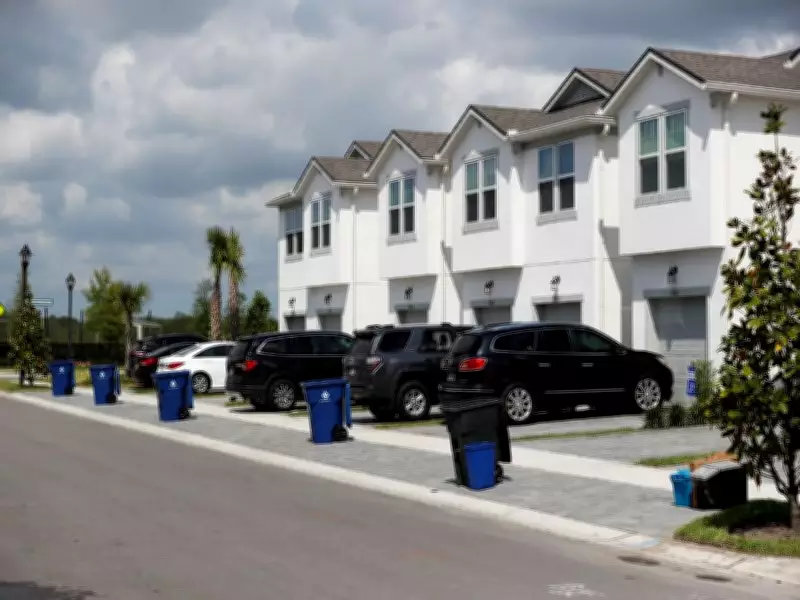
A new Federal Reserve working paper has revealed that the record-breaking spike in illegal immigration during the Joe Biden administration served as a primary catalyst for escalating property prices and rental costs across the United States. The study, released in July 2026, combines immigration court registries with administrative government data to quantify the economic footprint of the migration wave between 2021 and 2024.
Methodology and Context
The researchers attached a cautionary note, clarifying that the document is a preliminary draft distributed for academic and professional review. They emphasised that the conclusions do not formally represent the official stances of the Federal Reserve Bank of Dallas or the wider Federal Reserve System. The study coincides with a period in which immigration remains a highly contentious political battleground in the US.
Republican lawmakers contend that the border strategies implemented by former President Joe Biden heavily overextended public infrastructure and the housing market. Conversely, Democrats maintain that the incoming workforce played a vital role in resolving acute labour deficits and strengthening broader economic expansion.

Key Findings on Employment and Wages
According to the empirical findings, the massive arrival of unauthorised migrants provided a substantial lift to localised employment numbers while producing minimal observable downward pressure on worker pay. The data points to a distinct correlation: a one per cent rise in the presence of undocumented workers relative to the size of a local workforce led to a corresponding expansion in aggregate employment of roughly one per cent, with no tangible proof that the migration wave depressed baseline salaries.
On a broader scale, the economists calculated that the arrival of unauthorised migrant workers was responsible for approximately 30 per cent of all employment expansion in an average US metropolitan locality between March 2021 and March 2024.
Impact on Housing and Rental Markets
Simultaneously, the influx generated an intense surge in real estate demand. The identical one per cent workforce increase was linked to an estimated 2.2 per cent escalation in residential property values, alongside a 1.4 per cent upward tick in rental rates. The academic authors noted that residential construction projects failed to scale up sufficiently to absorb the heightened consumer interest. They ultimately concluded that the migrant influx essentially operated as a sudden housing demand shock within metropolitan markets that were already grappling with structural inventory shortages.
The study attributes approximately 30 per cent of residential property price inflation and nearly 20 per cent of rental rate growth to unauthorised migration within an average US metropolitan locality between March 2021 and March 2024. The research team reiterated that these statistical models reflect the circumstances of a typical metropolitan territory featured in the analysis, warning against the assumption that immigration served as the sole driver of the nationwide appreciation in real estate costs.
Scope of the Migration Wave
The analytical text characterises the period spanning from 2021 through 2024 as an 'unprecedented boom' in unauthorised border crossings. Relying on statistical records compiled by the Congressional Budget Office, the authors observed that net undocumented migration expanded the total US resident population by approximately 7 million individuals before experiencing a pronounced deceleration in mid-2024.