

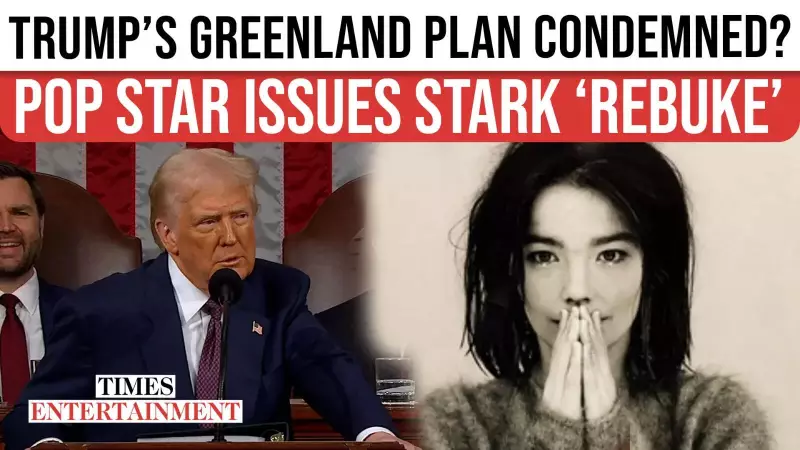
Global pop icon Björk has launched a fierce verbal assault on former US President Donald Trump, labelling him a "cruel colonizer" in a dramatic escalation of rhetoric. This outburst comes amid renewed international apprehension that the United States, under a potential future Trump administration, might reignite efforts to acquire control over Greenland.
Artistic Fury Meets Geopolitical Ambition
The Icelandic singer's condemnation was triggered by Trump's persistent assertions that America "needs" the vast Arctic territory for national defense and strategic purposes. Björk, known for her strong artistic and political views, framed this ambition not as a matter of security, but as a stark repetition of historical injustices. She explicitly connected Trump's interest to the painful legacy of colonial expansion, warning against reviving its associated horrors. The clash highlights a deep divide between realpolitik strategy and post-colonial ethical considerations.
Greenland: A Recurring Geopolitical Flashpoint
The idea of the United States purchasing Greenland is not new; it first gained significant attention during Trump's presidency in 2019, when he publicly floated the concept, much to the dismay of Denmark, which handles Greenland's foreign and defense policy. The territory's immense strategic importance in the Arctic, coupled with its rich natural resources, has long made it an object of desire for global powers. Trump's recent reiteration of this need has exploded fears of a forceful approach, transforming Greenland from a diplomatic curiosity back into a potential geopolitical crisis point.

A Global Conversation on Power and Identity
Björk's sharp criticism has ignited a wave of global discussion, extending far beyond music or politics news cycles. It has forced a mainstream re-examination of questions about power, control, and national identity in the 21st century. The incident raises serious questions: Can the acquisition of territory ever be divorced from the shadow of colonialism in today's world? How do smaller nations and indigenous populations, like the Inuit of Greenland, assert their sovereignty against the interests of superpowers? The pop star's intervention has ensured these difficult conversations are now happening on a global stage, with rising geopolitical tension as the backdrop.
The controversy, set against the looming possibility of Trump's return to power in 2026, underscores how cultural figures can shape international discourse. It remains a potent symbol of the ongoing struggle between historical memory and contemporary ambition.






