

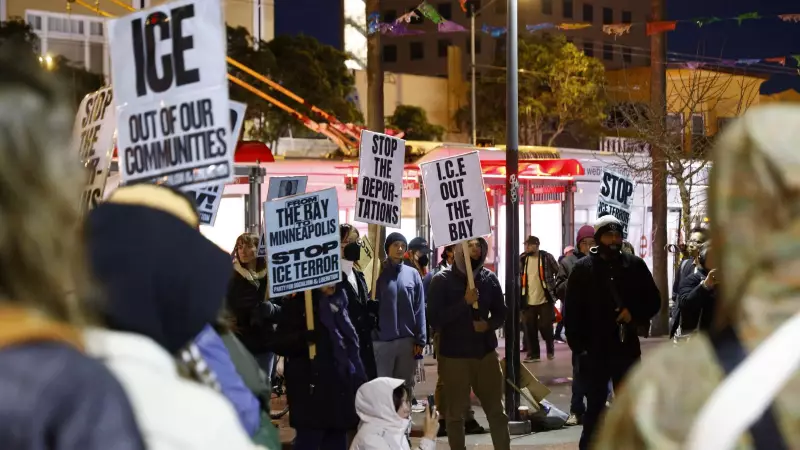
As a brown woman living in the United States, I carry a heavy fear when I think about joining protests. The recent killing of Renee Good by an Immigration and Customs Enforcement officer in Minneapolis has sharpened that fear into something raw and immediate.
A Life Cut Short in Minneapolis
Renee Nicole Good should be alive today. She was a 37-year-old wife, mother, sister, and daughter. Instead, an ICE agent shot and killed her on a Minneapolis street. The federal government's reaction has been to double down, deflect, and deny responsibility.
This tragic event happened just miles from where George Floyd was murdered in 2020. It feels like a rupture—a moment when the mask of federal authority slipped to reveal something dangerous underneath.

Conflicting Stories and a Locked-Down Investigation
The Department of Homeland Security claims Good "weaponized her vehicle" and tried to run over agents. However, eyewitnesses and local officials tell a completely different story.
Minneapolis Mayor Jacob Frey reviewed the bodycam footage and called the federal account "garbage." Governor Tim Walz stated the killing was "totally avoidable." Despite these local assessments, the federal government has taken control and shut down transparency.
The FBI seized the investigation, refusing to share evidence with Minnesota's Bureau of Criminal Apprehension. They have kept the footage hidden from public view. Hours after Good's death, Secretary of Homeland Security Kristi Noem labeled her a domestic terrorist, making it clear the narrative was being engineered rather than investigated.
Community Anger and Ongoing ICE Operations
Minneapolis and its suburbs are simmering with dread and anger. This is not just about Good's killing but about ICE operations that continue with impunity.
At a Minneapolis high school, ICE agents threw students onto snow-covered ground during arrest attempts. They then pepper-sprayed protesters and bystanders who tried to help. These operations target grocery stores, schools, and construction sites—no place seems off limits.
The Personal Cost of Fear
I wish I could say I will be out there every day, marching and chanting with a sign bearing Renee's name. The truth is more complicated for someone like me.
As a brown woman in America, I do not get to move through these moments with the same safety cushion others take for granted. I feel eyes on me before I even open my mouth. I carry a quiet, constant calculation in my mind.
What if something goes wrong at a protest? What if an agent decides I look "suspicious"? What if I am pushed, pepper-sprayed, or thrown to the ground? In those situations, the burden of proof will not fall on them. It will fall on me—on my body and on my identity.This fear is not hypothetical. It is lived through stories of people detained for being in the wrong place at the wrong time. Federal power, once unleashed, often fails to distinguish between a protester, a bystander, and a brown woman simply walking home.
Fear as a Form of Violence
That dread coiling in your stomach, making you hesitate before stepping into the street—it is part of the violence too. When the state can make you afraid to show up, speak out, or grieve in public, it has already taken something fundamental from you.
Historical Echoes and a Pattern of Behavior
The refusal to share evidence, the unilateral control of the narrative, and the invocation of "self-defense" without transparency echo tactics used by regimes that weaponized secrecy to suppress dissent. It is impossible not to recall the Gestapo of Nazi Germany or the Stasi of East Germany.
Good's killing serves as a stark warning, and it is not an isolated incident. Just one day after her death, Border Patrol agents shot and injured two people in Portland, Oregon. In September 2025, Silverio Villegas González was killed by federal agents outside Chicago under similarly murky circumstances. In both cases, the federal government shielded its agents from scrutiny.
ICE's Impunity and the Call for Change
ICE has operated with near-total impunity in cities across the country. Communities have been terrorized, families torn apart, and now a woman is dead. We must demand change.

- We must demand an independent investigation into Renee Good's killing.
- We must demand that federal agents operating in our cities be subject to local oversight.
- We must demand that the lives of people like Good be treated with the same value and dignity as anyone else's.
Renee Good's life mattered. Her death must not be forgotten. Her name must not become another footnote in a growing list of ICE casualties.
Kuhu Singh is a writer and community worker who has lived in the US for 26 years.




