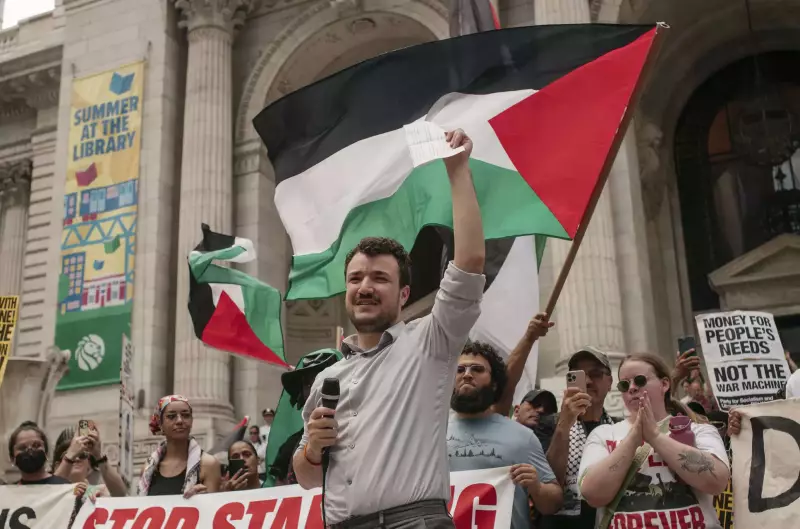
Court Revives Deportation Threat for Columbia Student Over Pro-Palestine Activism
A federal appeals court has delivered a significant blow to a former Columbia University graduate student. The ruling reinstates the possibility of detention and deportation for Mahmoud Khalil, pushing his legal challenge back into the immigration court system.
Appeals Court Reverses Lower Court Order
On Thursday, a three-judge panel from the 3rd U.S. Circuit Court of Appeals made a crucial decision. They reversed a previous lower court order that had secured Khalil's release from an immigration detention facility. The panel did not address the core constitutional question about the government's actions.
Instead, the judges focused on procedural jurisdiction. By a 2-1 vote, they determined that a federal judge in New Jersey lacked the authority to intervene at this particular stage of the process.

Why the Court Avoided the Constitutional Question
The judges explained their reasoning clearly. Under existing federal law, individuals like Khalil must first complete all proceedings in immigration court. Only after exhausting those options can they seek relief in the federal court system.
This legal structure allows petitioners just one opportunity to challenge government actions. The process often requires waiting, even when claims involve alleged unlawful conduct by authorities.
A Victory for Trump Administration's Deportation Efforts
The ruling represents a clear legal victory for the Trump administration's broader campaign. That campaign specifically targeted noncitizens involved in pro-Palestinian protests across American campuses.
Tricia McLaughlin, a spokesperson for the Department of Homeland Security, welcomed the decision. She called it "a vindication of the rule of law" in comments to the Associated Press. McLaughlin confirmed the department would move to enforce Khalil's removal order. She also urged him to leave the United States voluntarily.
Uncertainty Looms for Khalil's Immediate Future
It remains unclear whether authorities will immediately seek to re-detain Khalil. He holds lawful permanent resident status, and his appeals continue through the legal system.
Khalil expressed deep disappointment through a statement shared by the American Civil Liberties Union. He affirmed that his commitment to Palestine and to accountability would continue despite the legal setback.
His lawyer, Baher Azmy of the Center for Constitutional Rights, spoke to the Associated Press. Azmy noted that this decision conflicts with other federal court rulings. He emphasized that further legal options remain available to challenge the deportation.
Background: Arrest and Disputed Allegations
Mahmoud Khalil was a visible figure in pro-Palestinian activism at Columbia University. Authorities arrested him last March. He then spent three months in a Louisiana immigration facility.
This detention caused him to miss the birth of his first child. Federal officials have alleged his activities showed alignment with Hamas. However, they have not supported these claims with public evidence, and no criminal charges have been filed.
Officials have also accused Khalil of omitting information on his green card application. These allegations form part of the government's case for his removal.
The Rare Statute at the Heart of the Case
The government's argument relies on a rarely used statute. This law allows for the removal of noncitizens whose beliefs are said to threaten U.S. foreign policy interests.
In June, a federal judge ruled this justification was likely unconstitutional. That ruling led to Khalil's release from detention. The Trump administration appealed that decision directly, leading to Thursday's appeals court ruling.
Judicial Dissent and the Path Forward
Judge Arianna Freeman filed a dissenting opinion in the case. She argued that Khalil raised urgent constitutional claims suitable for immediate district court review.
The majority rejected this perspective. They maintained that the legal system often requires petitioners to wait through established channels before obtaining federal review.

Immigration authorities now face a decision. They must weigh whether to deport Khalil to Algeria or Syria. His lawyers strongly argue that either destination would place him in serious danger, adding another layer of complexity to this ongoing legal battle.