

When discussing the creation of the Indian Constitution, the narrative has long been dominated by a single figure: B R Ambedkar. However, a new initiative in the national capital is finally bringing to light the indispensable contributions of fifteen remarkable women who were instrumental in framing the nation's founding document. From Hansa Jivraj Mehta, a key voice in shaping international human rights language, to Dakshayani Velayudhan, the sole Dalit woman in the Constituent Assembly, their legacy had remained in the shadows for decades.
A Digital Tribute to the Founding Mothers
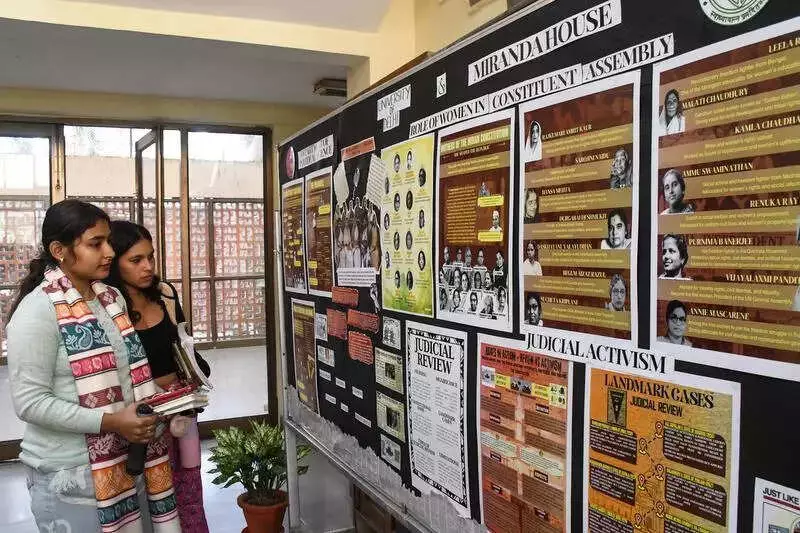
On Wednesday, Delhi University's prestigious Miranda House college unveiled a groundbreaking digital and interactive museum solely dedicated to these fifteen trailblazers. Housed within the college library, this pioneering project is the first of its kind within the university and is designed to offer a multi-layered sensory and archival experience. The launch event attracted a crowd of eager students who gathered around an interactive screen, exploring digitized speeches, flipping through a digital flipbook, and listening to rare audio clips sourced from Prasar Bharati.
The heart of the museum is a 'living wall' where visuals of all fifteen women—honored as the "pivotal founding mothers of the Indian Republic"—were projected. This dynamic display was accompanied by original audio recordings from the Constituent Assembly debates, focusing on critical issues like equality, minority rights, education, and gender justice that ultimately shaped the Constitution. The faculty described the atmosphere as electric, akin to a moment of collective rediscovery, with some students listening intently while others recorded clips on their phones. This living wall will be available for viewing on designated days and by special request.

Student-Led Initiative with a Lasting Impact
Explaining the museum's mission, Principal Bijayalaxmi Nanda emphasized the need to highlight these women's roles, as public awareness of them is minimal outside narrow academic circles. In a remarkable feat, the entire project—from archival research and scriptwriting to narration and design—was executed by the students themselves. "The idea was to build the museum with almost no financial burden," Nanda stated, noting that the total estimated cost was kept to around Rs 2 lakh.
The museum was officially inaugurated by Rajni Abbi, the Director of DU's South Campus and an alumna of Miranda House. It features curated panels, short biographies, rare documents, enacted renditions of speeches, and scanned letters. To ensure wide accessibility, the entire repository of content has been made available on the college website for remote access by researchers, students, and the general public.
Future Plans: A Stone Garden and Academic Integration
Looking ahead, Miranda House has announced an ambitious second phase. By January, the lawn outside the library is set to feature weather-resistant sculpted face installations of the fifteen women. This space will be formally named the 'stone garden'. In an innovative touch, these sculptures will double as tactile audio devices; touching a face will trigger the playback of original archival speeches or recorded renditions, a feature specifically designed for visually impaired students.
Inside the library, two-dimensional panels embedded with voice recordings will complement the digital exhibits. Beyond being a memorial, the initiative will also serve a direct academic purpose. Starting this academic year, the college plans to incorporate research on these women as an optional area of study for fourth-year students, encouraging them to trace the families of these pioneers and uncover missing links in the archival record.






