

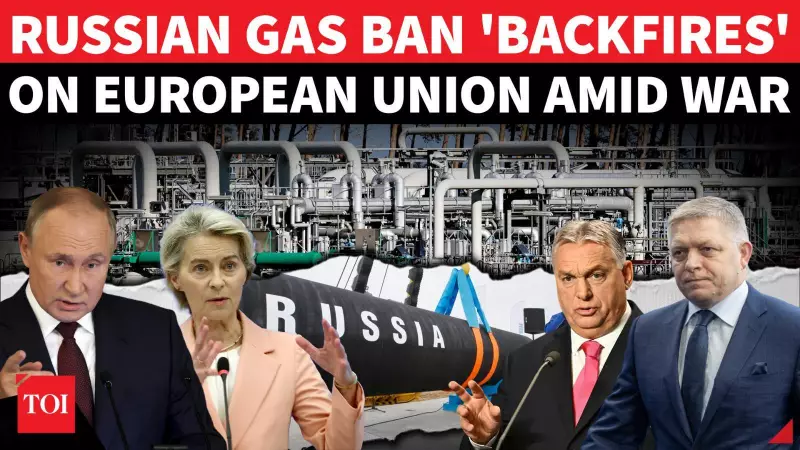
EU Faces Internal Legal Showdown Over Russian Gas Ban Decision
The European Union is confronting a significant internal legal crisis as two of its member states, Hungary and Slovakia, are preparing to launch lawsuits against Brussels. The contentious issue centers on the EU's decision to implement a complete ban on all imports of Russian natural gas by the year 2027.
Divergent Views on Energy Security and Sovereignty
EU leadership has consistently argued that this ban is an essential strategic measure to break Moscow's longstanding grip on Europe's energy supply network. They view it as a critical step toward enhancing the bloc's energy independence and security in the wake of geopolitical tensions.
However, the governments in Budapest and Bratislava have mounted a fierce opposition to this policy. They contend that the law represents a direct threat to national sovereignty, arguing that it was pushed through using a controversial legal workaround that bypasses proper democratic channels.

Economic Concerns and Household Impact
Both Hungary and Slovakia have expressed serious concerns about the potential economic consequences of the gas ban. They warn that the policy could lead to soaring household energy prices, placing an undue burden on their citizens and potentially destabilizing their national economies.
This legal confrontation comes at a pivotal moment as the European bloc accelerates its strategic pivot away from Russian fossil fuels. The timing highlights the complex balancing act between geopolitical objectives and domestic economic realities.
Parallel Green Energy Initiatives
While this legal battle unfolds, nine European countries have simultaneously pledged to transform the North Sea into what could become the world's largest clean energy reservoir. This ambitious project represents a parallel effort to secure Europe's energy future through renewable sources, even as the bloc grapples with the immediate challenges of transitioning away from Russian gas.
Broader Implications for European Unity
The looming court battles and policy disagreements are exposing deep fractures within the European Union regarding fundamental questions of security, sovereignty, and economic responsibility. At the heart of this crisis lies the difficult question of who should bear the real costs of decoupling from Russian energy supplies.
This internal conflict underscores the complex challenges facing European unity as member states navigate competing priorities between collective security measures and individual national interests. The outcome of this legal confrontation could have far-reaching implications for how the EU makes and implements energy policy in the future.






