

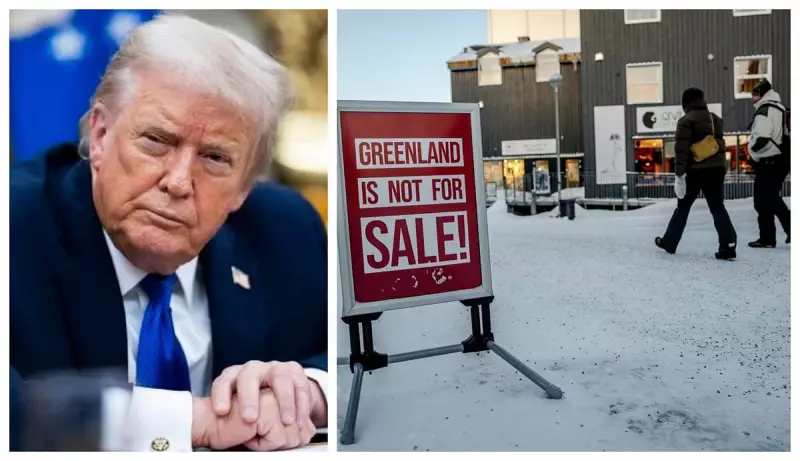
European Union leaders continue to harbor significant worries about managing what they perceive as the "bully" tactics of former US President Donald Trump, despite his recent reversal on several contentious issues. This concern persists even as Trump stepped back from previous threats that had escalated transatlantic tensions.
A Sudden Shift in Stance
On Wednesday, Trump abruptly changed course by withdrawing his threat to impose tariffs on eight European nations. This move came as a surprise to many observers who had anticipated further economic confrontation. Simultaneously, he explicitly ruled out the use of military force to acquire Greenland, a semi-autonomous territory that maintains close ties with Denmark, a key NATO ally.
Underlying Tensions Remain
Despite these conciliatory gestures, EU officials remain apprehensive about Trump's unpredictable foreign policy approach. The initial threats had created substantial diplomatic friction, and while the immediate crisis appears to be easing, the fundamental concerns about Trump's leadership style persist. European leaders are particularly wary of what they describe as his confrontational and unilateral methods.

The Greenland Question
The Greenland issue had become a particularly sensitive point in transatlantic relations. Trump's earlier suggestions about acquiring the territory were met with strong opposition from Denmark and raised questions about respect for allied sovereignty. His reversal on this matter, while welcomed, has not entirely alleviated European anxieties about future unpredictability in US foreign policy.
Looking Toward Potential Agreements
Trump's recent statements suggest that a diplomatic agreement might be within reach regarding the tariff disputes that have plagued EU-US relations. However, European leaders remain cautious, emphasizing the need for stable and predictable partnership frameworks. The experience has reinforced their determination to strengthen European strategic autonomy while maintaining essential transatlantic cooperation.
The situation highlights the complex dynamics between the European Union and the United States under Trump's leadership style. While immediate crises may be averted through last-minute reversals, the underlying structural concerns about approach and methodology continue to shape European strategic thinking and diplomatic preparations.






