Europe Confronts a Startling New Reality: The United States as Adversary
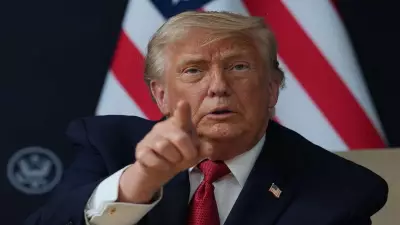
Europe finds itself grappling with an unimaginable situation. For over seven decades, the United States stood as its principal ally. Now, that relationship has transformed into what many perceive as an immediate threat. The catalyst for this dramatic shift comes from President Trump's recent ultimatum to Denmark. He has demanded the handover of Greenland, threatening a trade war and potential military action if his conditions are not met.
A Sudden Collapse of Trust and Security
This confrontation forces a painful re-evaluation across European capitals. The foundational trust in American partnership, carefully built since World War II, has evaporated over the past year. European leaders and the public alike are now questioning their deep reliance on the United States for both security and economic stability. An unpredictable Trump administration, which has repeatedly expressed antipathy toward Europe, now insists on seizing territory from a NATO ally.
Most European governments are actively seeking to de-escalate the current crisis. Their immediate goal is to delay any definitive break. However, the strategic dilemma is immense. The cost of replacing America's military role in the region, while simultaneously scaling back intertwined trade and investment to mitigate risk, appears prohibitive. European nations already struggle with sluggish economic growth and strained public finances.

The End of an Era for the Western Alliance
Even if a temporary compromise is found regarding Greenland, a profound sense of loss permeates Europe. The historically unique friendship known as "the West" will never be the same. This showdown, layered atop existing tensions with Trump, makes clear to many Europeans that the transatlantic relationship has turned toxic.
"Donald Trump has destroyed Western cohesion," stated Carlo Calenda, a centrist Italian senator and former Atlanticist. He now argues the Trump administration poses a direct threat to Europe's democracies. "Europe needs to make itself impermeable to every interference," he added, whether from the United States or Russia. Yet, he concedes, "the Europeans don't have the strength" to achieve this independence yet.
Europe has long understood the need for greater strategic autonomy, particularly regarding its own security. The rearmament process, spurred by U.S. pressure and Russia's invasion of Ukraine, is underway. However, the ambition was always a more equal partnership within NATO. Now, European officials watch the future of that very partnership crumble.
A Turning Point in Public Sentiment and Strategy
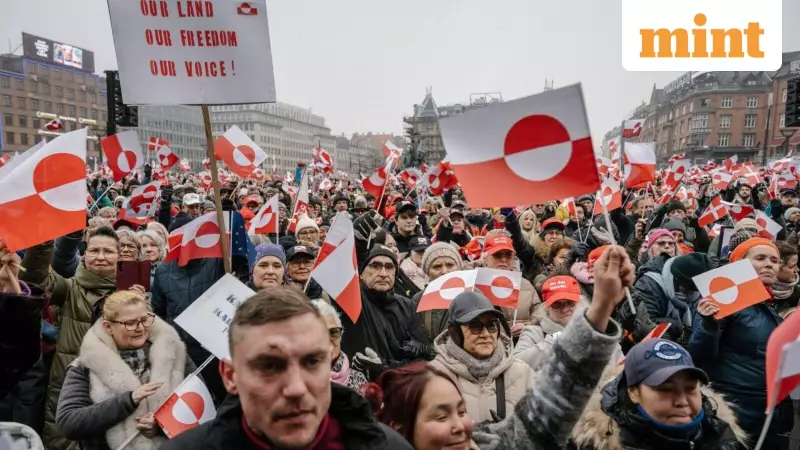
"This past weekend felt like a turning point," observed Rachel Ellehuus, director general of the Royal United Services Institute. She noted the remarkable sight of thousands protesting in both Greenland and Denmark, nations long counted among America's closest friends. The public backlash is significant.
The potential breakup would also harm the United States. NATO provides Washington with immense political influence across Europe and a vital network of bases for global power projection. European countries are major customers for U.S. defense contractors and critical partners for trade and investment. Ellehuus predicts Europe will now rely more heavily on its own defense industry to rearm.
Unwinding this deeply integrated relationship will not happen quickly. Some analysts, like Matthew Kroenig of the Atlantic Council, believe a solution will be found within weeks, noting Trump often escalates to force a deal before backing down. "Both sides will realize they have more to lose than gain from confrontation," he said.
Drawing a Line and Facing Economic Consequences
Despite a desire to defuse the situation, Europe recognizes a line must be drawn. "The U.S. acquiring Greenland through hostile means would be unacceptable and set a very dangerous precedent," warned Mujtaba Rahman of Eurasia Group. European diplomats describe relations with the White House as purely transactional. Creative solutions for Greenland are currently impossible amid Trump's threats and the uncertainty surrounding his motives.

The strategy of avoiding confrontation is no longer viable. Martin Jacob, a trade expert at IESE Business School, notes a growing willingness among Europeans to pay an economic price in a potential trade war. There is a palpable sense that Trump must be confronted, or his demands will not cease. Public opinion reflects this shift. A recent YouGov poll showed 67% of Britons support retaliatory tariffs if the U.S. imposes new tariffs on European allies.
Broader Geopolitical Squeeze and Lasting Costs
The alienation from Trump's America is compounded by other global pressures. China has transformed from a lucrative market into an industrial competitor threatening European manufacturing. Russia continues its war in Ukraine, seeking to redraw the post-Cold War order. Squeezed between these muscular powers, Europe is deepening ties with Latin America and Asian democracies.
The crisis also jeopardizes Ukraine. European officials fear Trump may leverage support for Kyiv to pressure Europe on Greenland. Since Trump escalated his Greenland threats, progress on U.S. security guarantees for Ukraine has stalled. Moscow is seen as a major beneficiary of this transatlantic rift. "Recent U.S. actions that break the cohesion and trust within NATO are a gift to Putin," said Doug Lute, a former U.S. ambassador to NATO.
The cost of decoupling extends far beyond economics. Europe must fundamentally rethink its relationship with power and military force. After the devastation of two world wars, the continent built a political identity based on rules, compromise, and institutions like the European Union. Now, it watches the world revert to raw-power politics.
"The EU was founded when the world was flat," remarked Carlo Calenda, referencing an era of globalized optimism. "During the end-of-history years, you could be slow, inclusive and believe that force doesn't matter. Not any more."
Public opinion in Europe has turned sharply. A November survey by the European Council on Foreign Relations found only 16% of Europeans view the U.S. as an ally sharing their values, down from 21% in 2024. The decline was stark in the UK, falling to 25% from 37%. As French expert Jérémie Gallon notes, European pride is at stake. "People are starting to feel that the sense of humiliation is at a point that is unacceptable." The continent stands at a historic crossroads, forced to confront the unthinkable demise of its most vital alliance.